UKRA LAUNCHES CAMPAIGN TO TACKLE RADON AWARENESS GAP FOUR YEARS AFTER MAP UPDATE
Many residents across the UK remain unaware that they and their families could be at risk from radon exposure in their homes.
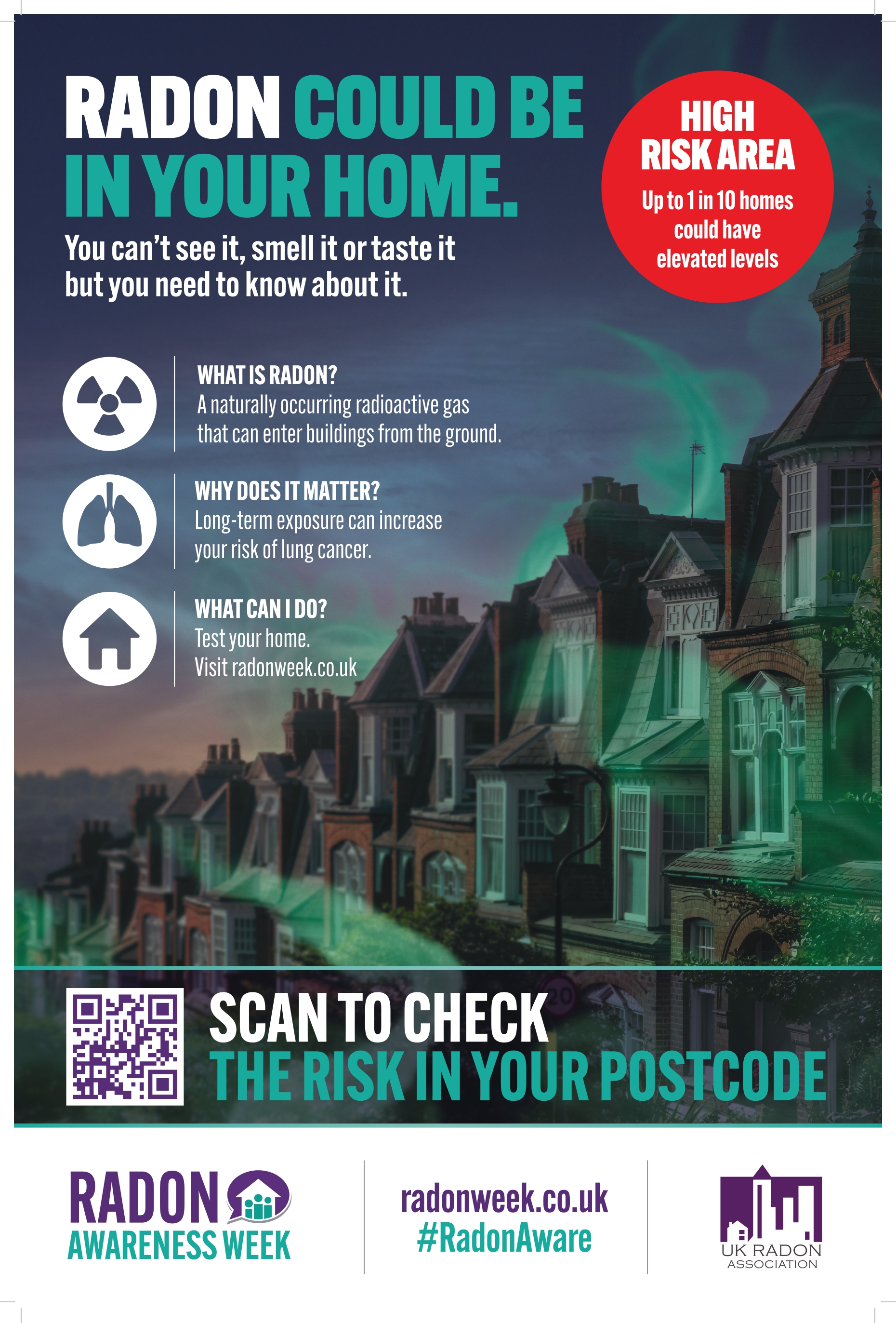
The UK Radon Association (UKRA) is today launching a targeted campaign across five locations to highlight the continuing knowledge gap surrounding radon – an invisible, odourless radioactive gas that is associated with an estimated 1,100 lung cancer deaths in the UK each year.
While radon has traditionally been associated with regions such as the South West of England, updated mapping published by the UK Health Security Agency (UKHSA) and British Geological Survey (BGS) in 2022 refined estimates of radon potential across Great Britain, highlighting areas where the risk may previously have been underestimated.
Four years on, many residents across the UK remain unaware that they and their families could be at risk from radon exposure in their homes. UKRA is highlighting five areas to raise awareness of this hidden health risk and encourage more people to test their homes and workplaces.
The five locations - Barry, Brighton & Hove, Coventry, Leeds and Lincoln - are among areas where the most recent geological mapping has changed the estimated likelihood of properties containing higher levels of radon. All areas of the UK have been mapped and given a risk rating, estimating the percentage of homes in an area likely to have high radon concentrations. Ratings range from a less than 1% chance to a greater than 30% chance. A “Radon Affected Area” is one where the estimated probability of a home having high radon levels is 1% or higher.
In some locations, the updated mapping presents a very different picture of radon risk:
- Brighton & Hove: previously categorised as 1-3% risk, now many parts of the city are in a 5-10% risk area, meaning up to 1 in 10 homes could be affected
- Barry: 83% of the mapped area of the CF62 postcode district now falls within the 10-30% risk band, upgraded from 5-10% risk in the previous indicative map
- Coventry: previously not a designated radon affected area, much of the city and its surrounding area is now in the 5-10% risk band, with some parts at 10-30% risk
- Leeds: areas in and around Leeds have seen rises, with the suburb of Farsley to the west of the city rising from a less than 1% risk to 5-10% risk
- Lincoln: areas to the east and south of the city are now deemed to have greater than 30% risk, meaning more than 1 in 3 homes could be affected
UKHSA recommends testing for all homes in Affected Areas. Employers are also required to assess workplace health and safety risks, including radon. Health and Safety Executive (HSE) guidance requires all workplaces to complete a suitable and sufficient workplace risk assessment, which usually requires testing to be carried out in Radon Affected Areas.
"Four years after the official maps were updated, we are still seeing widespread surprise when people discover their area is classified very differently," said Dr Maria Dugdale, Chair of the UK Radon Association.
“It’s important to be clear that radon levels haven’t suddenly spiked in these areas,” stressed Dr Dugdale. “Radon has always been present, however modern mapping technology coupled with increased numbers of test results gave us a far clearer picture back in 2022. The problem is that public awareness hasn’t kept pace with the data. Large numbers of people are still relying on outdated assumptions about where radon risk exists or remain unfamiliar with the risks posed by the gas.”
The latest UK radon mapping demonstrates why awareness efforts cannot simply focus on the traditional areas of the country associated with radon.
“The message this Radon Awareness Week is simple: don’t rely on what you think you know about your area - check the latest map and test if you’re at risk,” Dr Dugdale said.
UKRA says Radon Awareness Week, which runs from 2nd – 8th November, is an opportunity for householders, employers and public bodies to reassess their understanding of radon risk and make use of the latest available information.
The Association is calling on people to:
- Check the latest UK radon map at www.radonweek.co.uk
- Order a radon test if they live in a 1-3% risk band or higher
- Review workplace radon risks in accordance with HSE guidelines
- Take action if testing reveals elevated radon levels in the building
“The great news about radon is that this is a risk we can do something about,” Dr Dugdale concluded. “We cannot see it, smell it or taste it - but we can measure it, and if levels are high, we can reduce them. This Radon Awareness Week, we want people to stop assuming that radon is someone else’s problem and start checking the risk where they live and work.”
Press release distributed by Pressat on behalf of Source PR, on Tuesday 3 November, 2026. For more information subscribe and follow https://pressat.co.uk/
Radon Radon Awareness Radon Awareness Week UK Radon Association Public Health Lung Cancer Health And Safety Environment & Nature Government Health Home & Garden Medical & Pharmaceutical Public Sector & Legal

You just read:
UKRA LAUNCHES CAMPAIGN TO TACKLE RADON AWARENESS GAP FOUR YEARS AFTER MAP UPDATE
News from this source: