
Ten years on, Marmalade Trust warns of rising loneliness in the AI age
“It can be hard to admit that you're struggling. I started experimenting with AI as a way of processing how I was feeling.”
- Conor Warren (20) said: “It can be hard to admit that you're struggling. I started experimenting with AI as a way of processing how I was feeling.”
- Marmalade Trust’s new report urges ministers to embed social connection into health, housing, work and technology policy ahead of Loneliness Awareness Week
- Recommendation to address digital harms and ensure emerging technologies, including AI, are developed and used in ways that strengthen rather than replace human connection.
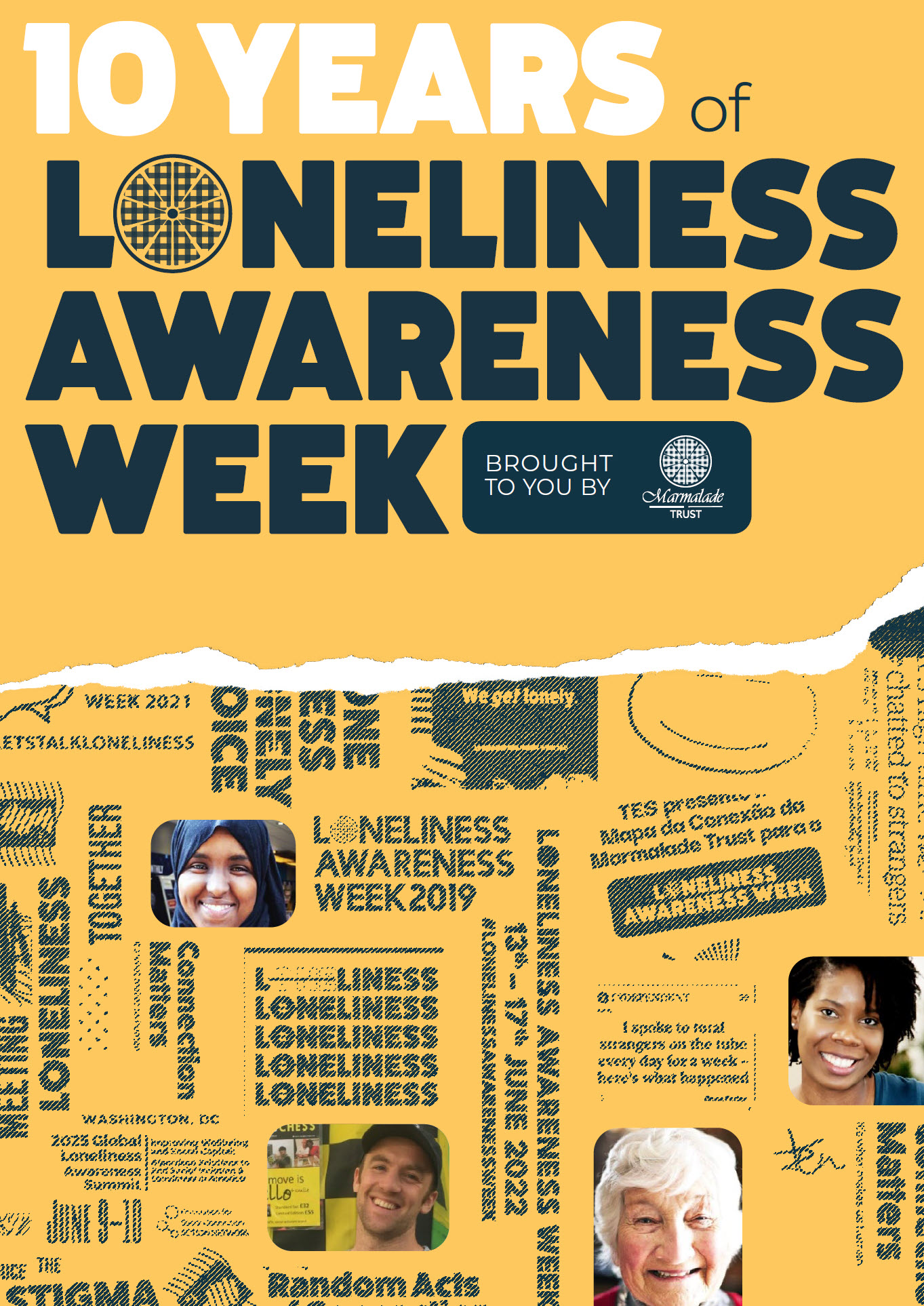
Ten years after the launch of the UK's first national campaign to address loneliness, leading charity Marmalade Trust is calling for renewed government action to address what it describes as one of the country's most pressing social and public health challenges.
Ahead of Loneliness Awareness Week (15-21 June), Marmalade Trust has published a landmark report reflecting on a decade of progress in reducing the stigma of loneliness while highlighting the scale of the challenge that remains.
The report reveals that despite significant advances in public understanding, loneliness remains widespread across society. More than four in five UK adults (82%) say they have experienced loneliness at some point in their lives, while 61% have never told anyone they felt lonely. More than half (56%) say embarrassment, shame or fear of judgement prevents people from speaking openly about it*.
To mark the tenth anniversary of Loneliness Awareness Week, Marmalade Trust and members of the Loneliness Policy Action Group** are calling for renewed national leadership through a cross-government action plan focused on social connection. The recommendations include:
- Technology: Addressing digital harms and ensuring emerging technologies, including AI, are developed and used in ways that strengthen rather than replace human connection.
- Health: Formally recognising social health as a core pillar of health policy and embedding loneliness prevention into major programmes including the NHS 10-Year Health Plan.
- Communities and public spaces: Appointing local loneliness champions and ensuring new housing developments, public spaces and transport networks are designed to promote social connection and belonging.
- Employment: Incorporating loneliness support into national employment strategies and workplace wellbeing frameworks to improve productivity and reduce economic inactivity.
- Public awareness: Building on a decade of progress through coordinated national efforts to reduce stigma and encourage more open conversations about loneliness.
These recommendations come amid growing concern that loneliness is increasingly affecting younger generations and also evolving alongside emerging communication technologies.
Conor Warren (20) from Ifracombe, Devon, can relate. He has described how, during his first months at university, he turned to technology - including AI tools - as a way of processing his feelings of loneliness. He said: “It can be hard to admit that you're struggling. I started experimenting with AI as a way of processing how I was feeling. I'd essentially pour out my thoughts and emotions and use it to help organise what was going on in my head. I asked questions about loneliness, how to cope with it, and how to make new friends. It helped me turn a jumble of feelings into something I could better understand.
“Sometimes it was helpful, but it wasn't a replacement for talking to real people. In some ways, it would reinforce the loneliness because I still wasn’t having genuine human interaction.”
Reflecting on the stigma that made it difficult to speak openly about how he was feeling at university, despite staying in contact with friends and family back home, he added: “I think part of what stopped me talking openly about feeling so lonely was the expectation that university is supposed to be the best time of your life. That everyone makes friends in the first week and immediately finds their place. I wasn't experiencing that, and I felt like I was supposed to be, so I pretended everything was fine.”
Connor’s experiences reflect growing concerns about the role of technology in shaping connection, particularly for younger people, and the importance of ensuring digital tools support rather than substitute human relationships.
Amy Perrin, Founder and CEO of Marmalade Trust, said: "Over the last decade we’ve made enormous progress in changing how people think and talk about loneliness. Millions more people recognise it as a normal human experience, and there’s a greater understanding of the impact it can have on our health, wellbeing and communities.
"But awareness alone is not enough. Loneliness continues to affect people of all ages, and the way people experience it is changing. We are seeing growing concerns around digital life, social disconnection and the pressures facing younger generations.
"That's why organisations working across research, policy and frontline services have come together to agree a shared set of recommendations. Loneliness is a complex societal challenge and addressing it requires a collective response. We now need the same ambition that helped put loneliness on the national agenda in the first place."
The report highlights the significant health, social and economic impacts of loneliness. The World Health Organization now recognises loneliness as a global public health challenge, while evidence suggests severe loneliness can cost the NHS and wider public services thousands of pounds per person each year. UK employers are also estimated to lose up to £2.5 billion annually through loneliness-related absenteeism, presenteeism and staff turnover.
As part of this year’s 10th anniversary campaign, Marmalade Trust is encouraging people across the UK to help create 10,000 connection activities during Loneliness Awareness Week, from coffee mornings and walks to community meals, workplace check-ins and school events. Communities, organisations and individuals have been adding events to the campaign’s Connection Map, which lists events across nine countries, showing the global reach of Loneliness Awareness Week.
In a first, the campaign will also see 11 prominent buildings lit up across the UK after sunset on Monday 15th June in a show of support for Loneliness Awareness Week. It’s part of Marmalade Trust’s wider call on cities to become the UKs most connected community.
Since its launch in 2017, Loneliness Awareness Week has reached more than one billion people worldwide and inspired over 12,000 activities designed to help people make meaningful connections.
ENDS
For further media information or to set up interviews please contact Paula Hunter or Sam Jones at Big Bang PR on [email protected] 07739 989915 or [email protected] 07531 625233.
Notes to editors
* Ipsos research with 2,215 UK adults aged 17-75 from 16-20 May 2025.
** The Loneliness Policy Action Group includes Marmalade Trust, the Jo Cox Foundation, Sheffield Hallam University's Centre for Applied Health and Social Care Research, Together.co, The Great Friendship Project, Campaign to End Loneliness, Age UK and Intergenerational England.
About Marmalade Trust and Loneliness Awareness Week
Marmalade Trust is an award-winning charity helping to raise awareness of loneliness and empower people to make connections. Since 2013, the charity has directly helped thousands of people and reached millions more. Their mission is for society to accept that loneliness exists and support one another to help make new connections.
Loneliness Awareness Week (15-21 June 2026) is a global campaign to raise awareness of loneliness. This year is the ten year anniversary of Loneliness Awareness Week with the theme of "Giving Loneliness a Voice." The week aims to reduce stigma by encouraging open conversations and sharing real stories of loneliness, highlighting that it is a natural human emotion and a shared experience.
Press release distributed by Pressat on behalf of Marmalade Trust, on Monday 15 June, 2026. For more information subscribe and follow https://pressat.co.uk/
Loneliness Lonely Mental Health Charity Awareness Week Gen Z Research AI Technology Report Campaign Social Affairs Public Health Charities & non-profits Children & Teenagers Consumer Technology Government Health Lifestyle & Relationships




You just read:
Ten years on, Marmalade Trust warns of rising loneliness in the AI age
News from this source: