
Untreated Perinatal Mental Health Conditions Cost Thailand THB 68 Billion (USD 2.1bn) per Birth Cohort, with Nearly Half of the Impact Falling on Children
New evidence package, policy recommendations, and modelling tools launched alongside the establishment of Perinatal Alliance for Mental Health Thailand
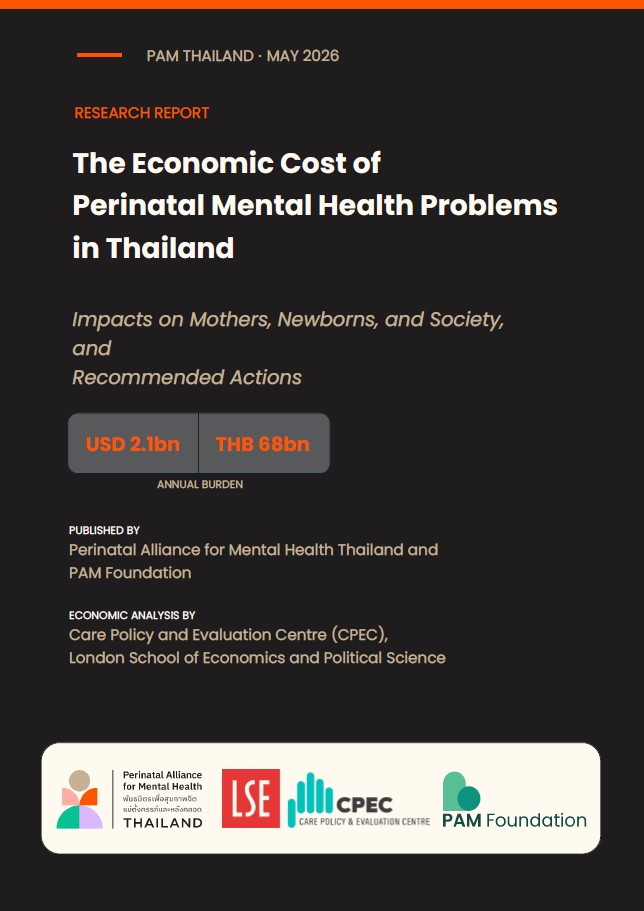
Bangkok, Thailand – 4 June 2026 – Untreated perinatal mental health conditions cost Thailand approximately THB 68 billion (USD 2.1 billion) for every annual birth cohort, according to new research launched today in Bangkok. Approximately THB 31 billion (45%) of this burden is associated with impacts on children, highlighting the substantial long-term consequences of maternal mental health conditions on child development, educational outcomes, wellbeing, and future productivity.
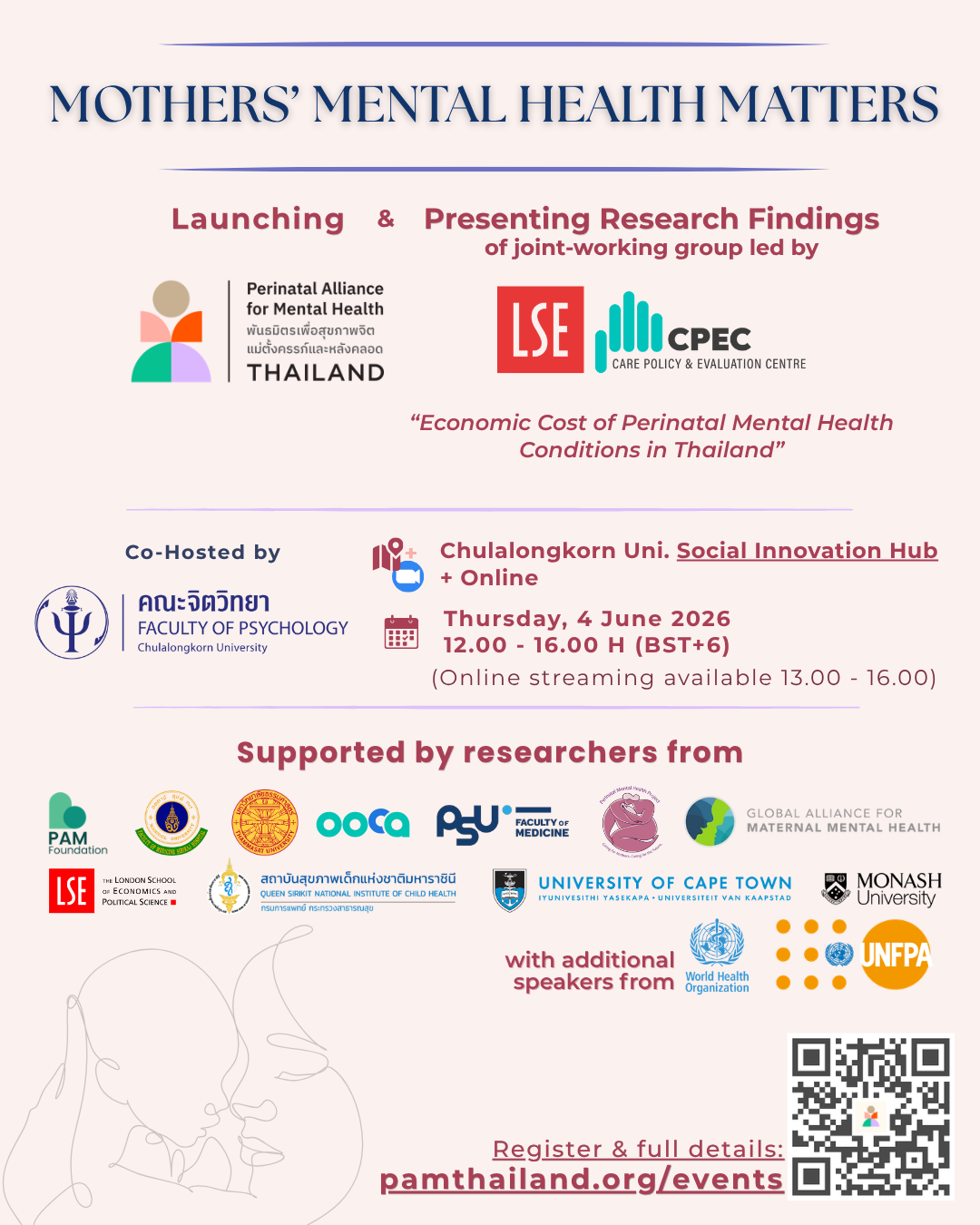
The findings were presented at a symposium hosted by the Faculty of Psychology at Chulalongkorn University Social Innovation Hub and attended by researchers, clinicians, policymakers, advocates, development partners, and people with lived experience from Thailand and internationally.
The event also marked the launch of the Perinatal Alliance for Mental Health Thailand (PAM Thailand), a new national initiative working to strengthen awareness, research, policy, and services for maternal mental health across Thailand.
A Comprehensive Evidence Package for Thailand
The symposium launched a suite of complementary resources designed to support evidence-informed action on perinatal mental health in Thailand.
Economic Modelling Study
The economic findings are presented in The Costs of Perinatal Mental Health Problems: A Modelling Methodology and Interactive Cost Calculator Tool Applied to Thailand, an academic research paper led by researchers from Care Policy and Evaluation Centre (CPEC), London School of Economics and Political Science (LSE) and collaborators.
The study provides the first Thailand-specific estimates of the economic burden associated with untreated perinatal mental health conditions and introduces a transparent methodology that may be adapted for use in other countries.
Thailand Research Report
A broader research report, developed by PAM Thailand and PAM Foundation with contributions from Thai and international partners, synthesises evidence on perinatal mental health in Thailand, including prevalence, risk factors, service provision, stakeholder perspectives, implementation considerations, and opportunities for strengthening support for mothers, infants, and families.
The report also presents a series of recommendations for policymakers, healthcare providers, professional organisations, researchers, employers, and civil society stakeholders.
Policy Brief
A companion policy brief summarises key findings and priority recommendations for decision-makers, highlighting practical opportunities to improve outcomes for mothers and children while reducing long-term social and economic costs.
Why It Matters
Perinatal mental health conditions, including depression, anxiety, and related mental health challenges during pregnancy and the first year after birth, are among the most common complications of pregnancy and childbirth worldwide.
The analysis indicates that much of the burden falls outside the health sector, including productivity losses, reduced workforce participation, long-term disability impacts, and adverse outcomes affecting children throughout their lives.
With Thailand facing declining birth rates and increasing concern about child development and future human capital, the findings underscore the importance of supporting maternal mental health as an investment in both current and future generations.
From Evidence to Action
Alongside the publications, researchers launched an interactive economic modelling platform through the Global Economics and Maternal Mental Health (GEMMH) initiative.
The online tool allows policymakers, researchers, health planners, and development partners to explore the economic impacts of untreated perinatal mental health conditions and assess potential outcomes under different policy and investment scenarios.
The platform is intended to support evidence-informed decision-making in Thailand and facilitate future adaptation in other countries.
Launch of PAM Thailand
The symposium also marked the formal introduction of PAM Thailand, a multi-stakeholder alliance dedicated to advancing maternal mental health through advocacy, awareness, research translation, professional education, and cross-sector collaboration.
PAM Thailand aims to bring together government agencies, healthcare providers, academic institutions, professional associations, civil society organisations, development partners, employers, and people with lived experience to improve outcomes for mothers, infants, and families across Thailand.
Quotes
“The costs of inaction are substantial and extend far beyond the healthcare system, affecting women’s wellbeing, children’s future opportunities, and Thailand’s long-term economic productivity.” – Associate Professor Annette Bauer, Care Policy and Evaluation Centre (CPEC), London School of Economics and Political Science.
“We hope this work will increase awareness of the profound impact that perinatal mental health conditions have on mothers, children, families, and society. By making the scale of the challenge visible, we hope it will generate the attention, partnerships, and investment needed to improve support for families across Thailand.” – Hamish Magoffin, Founder, Perinatal Alliance for Mental Health Thailand.
“Because mental health challenges during pregnancy are often complex, effective care requires a multidisciplinary approach. It cannot be managed effectively by only one medical specialty alone. Relevant organisations, especially government bodies, must also play a role in driving policy and developing healthcare personnel.” – Professor Emeritus Sarikapan Wilailak, President, the Royal Thai College of Obstetricians and Gynaecologists.
“Maternal mental health during pregnancy is an important issue, and it requires collaboration between many different healthcare professionals. Nurses, psychiatric nurses, and paediatric nurses, as well as clinical psychologists and counselling psychologists. Working together will improve the effectiveness of care for pregnant women attending antenatal services.” – Dr Wasin Bamrungcheep, President, Psychiatric Association of Thailand.
Notes to Editors
Publications Released
- The Costs of Perinatal Mental Health Problems: A Modelling Methodology and Interactive Cost Calculator Tool Applied to Thailand
- Economic Cost of Perinatal Mental Health Conditions in Thailand: Impacts and Recommended Actions
- Policy Brief: Economic Cost of Perinatal Mental Health Conditions in Thailand
- GEMMH Interactive Cost Calculator Tool
Together, these resources provide an integrated evidence, policy, and implementation package designed to support action on perinatal mental health in Thailand.
Key Findings
- Untreated perinatal mental health conditions are estimated to cost Thailand approximately THB 68 billion per annual birth cohort (births within a 12-month period).
- Approximately THB 31 billion (45%) of the total burden is associated with impacts on children.
- Costs extend beyond healthcare and include productivity losses, long-term disability impacts, and child outcomes.
- The findings represent the first Thailand-specific economic estimates of the burden of untreated perinatal mental health conditions.
- The evidence package includes economic analysis, broader contextual research, policy recommendations, and an interactive modelling tool.
Symposium Information
Event: Economic Cost of Perinatal Mental Health Conditions in Thailand: Impacts and Recommended Actions
Date: 4 June 2026
Venue: Chulalongkorn University Social Innovation Hub, Bangkok
Format: Hybrid (in-person and online)
Participating and Contributing Organisations
The report and symposium were made possible through contributions from researchers, clinicians, policymakers, advocates, and organisations in Thailand and internationally, including:
- Care Policy and Evaluation Centre (CPEC), London School of Economics and Political Science
- Siriraj Hospital
- Chaophya Abhaibhubejhr Hospital
- Thammasat University
- Prince of Songkla University
- Queen Sirikit National Institute of Child Health
- Ooca
- Monash University
- University of Cape Town
- Perinatal Mental Health Project
- Global Alliance for Maternal Mental Health
- PAM Foundation
- PAM Thailand
Resources at a Glance
The symposium launches a comprehensive package of resources designed to support research, policy development, advocacy, and implementation in perinatal mental health.
|
Resource |
Purpose |
|
Economic Modelling Study |
Academic paper presenting the economic modelling methodology, Thailand cost estimates, and interactive calculator framework |
|
Thailand Research Report |
Broader evidence review, situational analysis, stakeholder perspectives, and recommendations for Thailand |
|
Policy Brief |
Summary of key findings and priority actions for decision-makers |
|
GEMMH Interactive Cost Calculator |
Online tool for economic modelling, scenario analysis, and policy planning |
Resources
All publications, tools, and supporting materials associated with the launch are available at: www.pamthailand.org/research
Resources include:
- Economic Modelling Study (LSE-led preprint)
- Thailand Research Report
- Policy Brief
- GEMMH Interactive Cost Calculator
- Symposium Information
- Symposium Recording (to be published)
This page will be updated as additional resources become available.
Thai-language versions of selected materials are currently being prepared and will be released separately.
About Perinatal Alliance for Mental Health Thailand (“PAM Thailand”)
PAM Thailand is a national multi-stakeholder initiative working to improve maternal and infant mental health through awareness, research translation, professional education, advocacy, and collaboration. The alliance brings together healthcare professionals, researchers, policymakers, civil society organisations, development partners, employers, and people with lived experience to strengthen support for mothers, infants, and families across Thailand.
About PAM Foundation
PAM Foundation was established to address perinatal mental health conditions through its “Three Pillars”: I) Awareness and Education, II) Care, and III) Research. The Foundation works with academic institutions, healthcare providers, governments, development partners, and civil society organisations to strengthen evidence-based approaches to perinatal mental health and related areas of public health.
About Care Policy and Evaluation Centre (CPEC), London School of Economics and Political Science
The Care Policy and Evaluation Centre (CPEC) is a research centre within the London School of Economics and Political Science (LSE) dedicated to improving health and social care policy through rigorous research, evaluation, and economic analysis. CPEC works with governments, healthcare providers, international organisations, and communities to generate evidence that supports better outcomes and more effective use of resources. Its research spans mental health, social care, ageing, public health, health systems, and economic evaluation, with a strong focus on translating evidence into policy and practice.
About GEMMH
The Global Economics and Maternal Mental Health (“GEMMH”) initiative brings together researchers, policymakers, healthcare professionals, advocates, and development partners to strengthen the economic evidence base for maternal mental health. GEMMH develops research, tools, and resources that help quantify the societal and economic impacts of perinatal mental health conditions and support evidence-informed decision-making. Through international collaboration, the initiative aims to improve understanding of the costs of inaction and the potential benefits of investing in maternal mental health across diverse country settings.
Media Enquiries
[email protected]
Press release distributed by Pressat on behalf of PAM Foundation, on Thursday 4 June, 2026. For more information subscribe and follow https://pressat.co.uk/
Perinatal Mental Health Mental Health Maternal Mental Health PPD Perinatal Depression Postpartum Depression Women's Health Charities & non-profits Health Medical & Pharmaceutical Women & Beauty




You just read:
Untreated Perinatal Mental Health Conditions Cost Thailand THB 68 Billion (USD 2.1bn) per Birth Cohort, with Nearly Half of the Impact Falling on Children
News from this source: