Presciense turns the broadband gateway into a smart energy platform
Containerised agent brings live smart meter data into the operator's own app through the new TR-517 standard, and gives Britain's smart meters a broad
Presciense today announced that its smart energy agent implements the energy data model within TR-517, the standard published by the Broadband Forum on 22 July that for the first time gives household energy data a recognised place in the management systems operators use to run millions of home gateways. The agent ships as one containerised codebase under 8MB, small enough for the flash and memory budgets of gateways already in the field, packaged for prplLCM on prplOS and for DAC lifecycle management on RDK-B, with a standard LXC container serving compatible Linux devices beyond both. It runs on fibre gateways, Wi-Fi repeaters and smart hubs with Zigbee support, connecting to Britain's SMETS2 smart meters.
Operators have long wanted live consumption and tariff data to flow through their gateways and into their customer apps, and until now the only route has been a proprietary integration. TR-517, which extends the data model behind the User Services Platform (USP), removes that need, so an operator's existing USP controller can read live demand, energy imports and exports, meter identity and the household's current and forthcoming tariff through the same interface it already uses to manage Wi-Fi.
Household energy has become something people check the way they check the weather, market-wide half-hourly settlement is strengthening the case for time-of-use and flexibility tariffs, and customers cannot respond to a tariff they cannot see. The most responsive home energy management services need local, real-time data at the point where decisions are taken, which is what the agent's 10-second feed delivers. The agent is also designed to operate as a Virtual WAN Device within compatible DCC deployments, allowing the broadband line to carry smart metering traffic where cellular coverage is weakest.
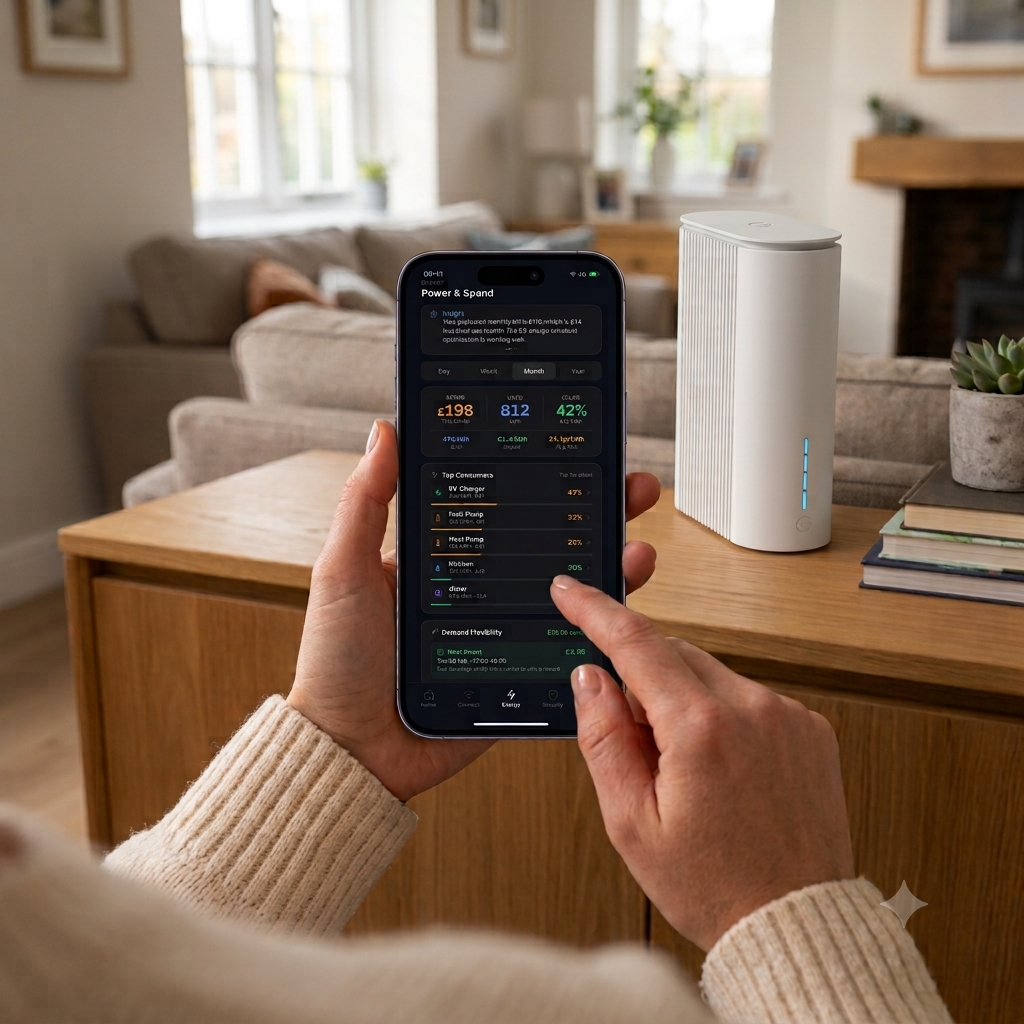
For broadband service providers, the proposition enables existing home gateways that support Zigbee to drive further customer engagement and loyalty. Live consumption and tariff data surfaces in the operator's own mobile app, and the operator can build home energy management capabilities around it with advice and tariff suggestions grounded in actual usage, because an app that helps people save money on their energy bills earns its place on the home screen, and a customer who opens their broadband app every day has one more reason never to churn. Research by FTI Consulting finds converged customers roughly 19% more likely to be net promoters of their home internet provider, and Dutch smart meter trials found around 70% of energy app users still using the app months after adoption. In the UK, the longest-established multiservice utility provider has grown past 1.3 million households on bundled essential services and the lower churn they bring.
The agent's OpenADR 3.0 VEN capability extends the model into demand flexibility, allowing enrolled customers with compatible devices to respond automatically to flexibility events and earn credits where the programme provides them, so the operator earns the loyalty of helping customers cut their bills without ever becoming an energy supplier. The revenue opportunity sits alongside the loyalty: the same app opens an upsell channel for home energy management devices and smart appliances and carries commission on tariff recommendations the customer acts on, while partnerships with retail energy providers and smart energy companies extend it further. Service providers can see how the experience integrates into their own mobile app at https://www.presciense.com/innovation.html.
"The broadband gateway is the heart of connectivity in the home, but operators have lacked a standard way to bring household energy data into that environment," said Jonathan Lishawa, Founder and Chairman of Presciense. "TR-517 provides that standard route into the operator management model, and our agent lights it up on the gateways operators already own, through the container frameworks they already run. A service provider can now put live consumption and tariff data into the app through which they already manage the customer relationship, and can build home energy management services on the engagement that follows, without forking firmware and without commissioning another proprietary data model. The operators who move first will find the hard engineering has already been done for them."
Presciense has been developing regulated energy solutions since 2015, launching devices for UK utilities and telcos that include SMETS2 in-home displays and consumer access devices, with its platform, now at production readiness, trialled in UK homes to 99.9% measured software availability. TR-517 implementation guidance and packaging documentation for operator platform teams follow in the coming weeks.
About Presciense
Presciense is a smart energy Internet of Things company working at the boundary between the regulated smart metering estate and the connected home. Established in 2015, it holds party status under the Smart Energy Code, operates Data Communications Company connected agent capability, and develops gateway and home hub technology for broadband operators, energy suppliers and network partners. Its device heritage spans in-home displays, consumer access devices and connected care products, and its agent platform extends from smart metering to remote patient monitoring and security and safety services.
Media contact
Presciense Press Office [email protected]
Press release distributed by Pressat on behalf of Presciense, on Wednesday 5 August, 2026. For more information subscribe and follow https://pressat.co.uk/
USP TR-517 smets2 Smart Meters DCC Virtual WAN Connectivity Broadband Forum Agent Home Energy Management Fibre WiFi Gateway Presciense Computing & Telecoms

You just read:
Presciense turns the broadband gateway into a smart energy platform
News from this source: