New Survey: Syrians Optimistic about the Country’s Future, with Regional Variations across Syria
New Survey: Syrians Optimistic about the Country’s Future, with Regional Variations across Syria
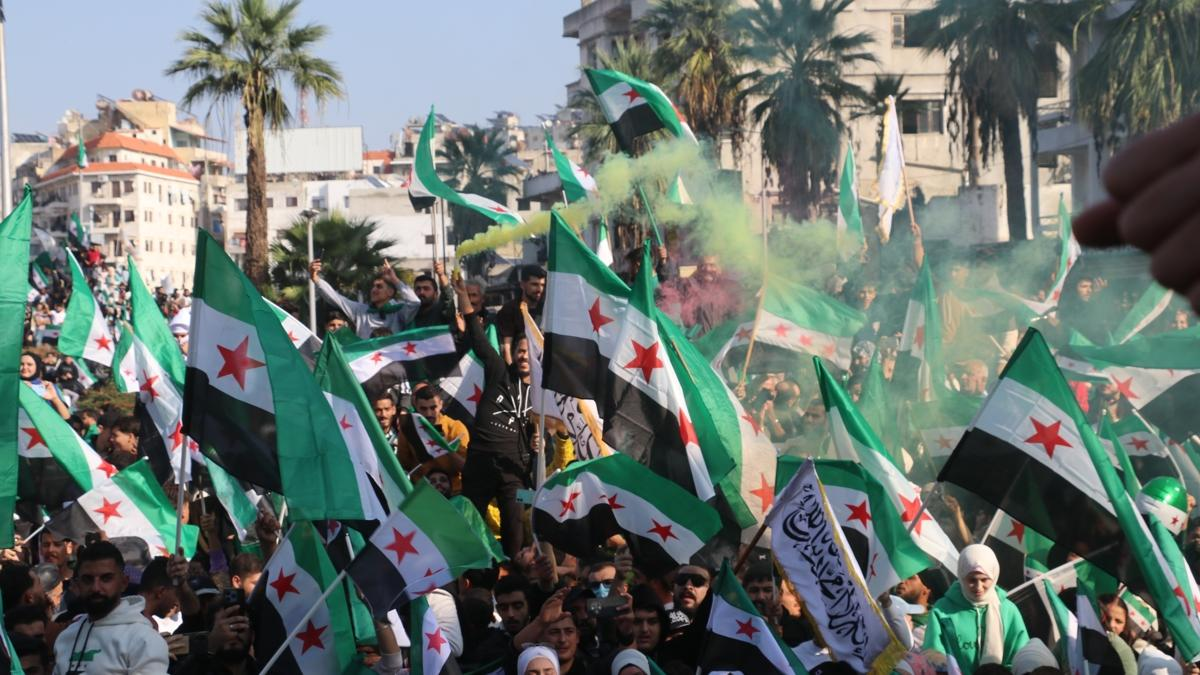
A survey conducted by Investimate and the Syrian and Levant Market Compass (SLMC) on the first anniversary of the Syria Liberation Day reveals a diverse mix of satisfaction and caution.
Damascus, December 15, 2025— Investimate and the Syrian and Levant Market Compass (SLMC) announced the findings of a nation-wide public opinion survey, covering 1062 participants across all Syrian governorates. The survey took place between November 30th and December 5th, 2025. The survey offers one of the most comprehensive snapshots available of the Syrian public sentiment, one year after liberation.
A Complex Landscape: A Broadly Optimistic Majority, with a more Cautious Segment
The survey findings reveal that the overall Syrian mood is neither uniform nor simplistic. According to the data, nearly 4 out of 5 Syrians rate the government’s performance as being “good”, or “very good”, while around 85% believe the country is moving in the right direction. Approximately, 69% feel that they are “completely free” or “very free” in expressing their political opinions.
To place these findings in a broader context, data from a comparable survey conducted by Investimate and SLMC in January 2025, which also covered all Syrian governorates, indicate that around 94% of participants nationwide stated that “Syria is moving in the right direction”. That earlier survey was the first large-scale national opinion poll conducted after the fall of Bashar al-Assad’s rule, serving as an early benchmark for public sentiment in the new phase.
A comparison between the findings of the January and December 2025 surveys shows a decline in the share of those who believe the country is moving in the right direction, from around 94% to approximately 85%. Nevertheless, this still represents a high proportion, reflecting the continued overall positive direction of public opinion.
Strong Confidence in the State, with a Warning Signal Regarding Army Confidence Index
The survey findings indicate that the confidence levels in official institutions are generally high. About 83% of participants express their confidence in the country’s president; about 77% have confidence in the General Security and the security services; nearly 73% have confidence in the judiciary; and 71% have confidence in the traffic police, whereas confidence in the army is at lower levels compared to the other institutions included in the survey, with only around 64% expressing confidence in the army.
Commenting on this, Firas al-Kayyal, the CEO of Investimate and SLMC, stated:
“While confidence levels in institutions remain generally high, confidence levels in the army recorded the lowest level among all institutions included in the survey. This could be read as an indicator of public opinion being influenced by the events that some regions witnessed, including those in As-Suweida. This could also be due to the conviction that the army’s current capabilities remain weak compared to other regional armies, particularly given its near complete lack of air defence and its inability to prevent violations along the southern border.”
Foreign Partners: A Pragmatism-Oriented Syrian Mood
At the level of foreign partnerships, the survey outlines a Syrian mood that clearly leans more towards pragmatism over traditional ideological frameworks. When asking participants about their favorite economic partner, Saudi Arabic tops the list, followed by the United States then Turkey. In political and security partnerships, preference tilts towards Turkey and the United States, as the two most favorite partners in matters of security and stability.
At the same time, a large majority of respondents express their wide support for cooperation with the United States in combating ISIS/Daesh, with around 84% agreeing (strongly or somewhat), compared to about 16% who oppose such cooperation.
Peace with Israel remains a divisive issue. Despite a noticeable increase in the percentage of those who support a peace agreement—from 20% in previous studies to 41% in this survey—nearly 59% of participants still oppose entering into an agreement with Israel.
According to Investimate’s and SLMC’s analysis of the survey findings, this mix of openness to security and economic cooperation on one hand and the continued sensitivity regarding Israel on the other, reflects a smooth transition toward an approach based on direct cost-benefit considerations in people’s lives, rather than broad ideological slogans.
Commenting further on these findings, al-Kayyal says:
“What the numbers show is that the Syrian public is moving gradually towards clear pragmatism. People are no longer captive to grand slogans or ideological polarisation; they are increasingly willing to separate issues and evaluate each partnership based on what it adds to the individual’s security, dignity and job opportunities. It is a slow but profound transition—from a policy that defines people by their overarching identities, to a policy that places the human being as a citizen with clear daily rights at the center of the equation.”
Conclusion: One Year After Liberation, the Compass Points to the Years Ahead
Just one year after the Syria Liberation Day, these findings present a complex yet clearly defined picture; around 85% of participants believe Syria is moving in the right direction, while also expressing high levels of confidence in institutions, along with a desire to invest in the current phase of stability.
On the other hand, comparing these results with the January 2025 wave of the survey shows that the feeling that the country is heading towards a better path was not a fleeting post-regime-fall sentiment, but rather, a recurring pattern in public opinion measurements over the past year, accompanied by a growing awareness of the regional differences and the need to address them with are more precise and equitable policies.
Al-Kayyal concludes:
“Liberation was not the end of the road, but its new beginning. This survey tells us that Syrians have given the political and economic structures a rare opportunity to be re-established on the foundations of law and equality among citizens. They are now waiting to see this opportunity translated to better services, clearer justice, and a more dignified daily life. If we succeed in building on this moment, we can move from managing a difficult reality that is open to challenges to establishing a modern state that is capable of offering its people a genuine feeling of safety and opportunity—, and that, in my view, is a realistic reason for optimism, not a merely beautiful slogan.”
Adding these findings to previous studies, analysts at Investimate note that response patterns point to a clear aspiration for a state model that is run by general rules rather than individual whims; a state based on the rule of law, equality among citizens, institutional neutrality towards religious and sectarian affiliations, and being at equal distance from everyone. The increased feeling of political freedom, demanding justice and living in dignity, and preference of foreign partnerships based on the direct public benefit all indicate that a growing segment of Syrians seeks a public sphere that protects the freedom of belief, the right to differ, and equal opportunities free from discrimination.
According to this reading, the most significant shift suggested by the data is not merely in the levels of satisfaction or dissatisfaction, but in the type of state people envisage for their future; a state that defines its people first and foremost as citizens with rights and responsibilities; subjects authority to accountability, and links legitimacy to its ability to provide services, justice and security for all everyone without exception. If all these signals are recognized and translated into gradual yet serious reforms, the coming years may represent not just a struggle with challenges, but a genuine opportunity to build a more cohesive society and a more stable, open state. This, as the analysis teams in both Investimate and SLMC emphasize, is another reason to look to the future with greater optimism and responsibility at the same time.
About Firas al-Kayyal
Firas al-Kayyal is one of the leading market and public opinion researchers in Syria and the region, with nearly three decades of experience in designing and implementing field and social studies. He currently serves as the owner, founder, and general manager of Syrian and Levant Market Compass, a position he has held since 1996. He has led dozens of research projects that have accompanied the Syrian economy's transformation towards a more open economy, providing informational support to decision-makers, investors, and international companies seeking to enter the Syrian market, relying on a combination of local knowledge and scientific research methodologies.
In 2014, Firas founded Investimate in Istanbul, as a regional research and consulting services network that relies on specialized field teams in several countries across the region. Investimate offers a wide range of services, from designing research tools and data collection to advanced analysis and reporting for international and local organizations. Prior to this, he worked as a market research manager at several Syrian consulting offices. He holds a Bachelor of Science degree and is the Syria representative for Gallup International Association. He is also active in international professional networks specializing in public opinion research, including the World Association for Public Opinion Research (WAPOR) – West Asia and North Africa Chapter.
About Syrian and Levant Market Compass (slmc-sy.com)
The Syrian and Levant Market Compass (SLMC) was founded in the mid-1990s. It was the first company specializing in market and public opinion research. It operates through a network of researchers and field supervisors covering all Syrian governorates and several neighbouring countries. The company offers services including consumer behaviour studies, brand image measurement, public opinion polls, and market feasibility studies, all while adhering strictly to professional standards, research ethics, and data security.
About Investimate (investimate.net)
Investimate is a regional market research, public opinion, and consulting firm based in Istanbul. It collaborates with professional field teams across several countries in the Middle East and North Africa. The company provides comprehensive research solutions, from designing methodologies and measurement tools to data collection, advanced analysis, reporting, and interactive dashboards, supporting decision-making by governments, international and humanitarian organizations, and the private sector through its offices and platforms in the region and the United Kingdom.
Press release distributed by Pressat on behalf of investimate, on Monday 15 December, 2025. For more information subscribe and follow https://pressat.co.uk/
Syria Syrian Public Opinion Opinion Poll Nationwide Survey Investimate Syrian And Levant Market Compass SLMC Syria Liberation Day Government P Government
Published By
00447345338641
media@investimate.net
investimate.net
For inquiries, media coverage requests, or interview requests:
media@investimate.net
Damascus
00963933465416
Istanbul
00905526637740
London
00447345338641
Visit Newsroom

Media
You just read:
New Survey: Syrians Optimistic about the Country’s Future, with Regional Variations across Syria
News from this source: