
International pharmacy body, national associations win backing from governments to develop new African College of Pharmacists
A specialised pharmacy workforce will play an integral role in delivering optimal pharmaceutical care
EZULWINI, ESWATINI — The Commonwealth Pharmacists Association (CPA) and the National Pharmacy Associations (NPA) of six African countries celebrated on Thursday evening after Ministers attending the 76th Health Ministers Conference of the East, Central and Southern African Health Community (ECSA-HC) formally adopted a resolution that promises to pave the way for the creation of an ECSA-HC College of Pharmacists.
Representatives of CPA and the NPAs of Tanzania, Uganda, Zimbabwe, Malawi, Kenya and host country Eswatini – all members of CPA – presented a proposal to Health Ministers from the nine ECSA-HC member states who gathered in Eswatini, seeking their backing to draw up a detailed proposal for the formation of a postgraduate training centre for pharmacists working in the region. Ministers subsequently adopted a resolution which includes authorisation for ECSA-HC’s Secretariat to work with CPA and other key stakeholders on the development of a comprehensive proposal for how the College could be formed and supported.
The creation of such a College would represent a significant advance in workforce training in the nine ECSA countries. Although similar colleges already exist to serve the postgraduate training needs of nurses and surgeons among others, no such provision exists for pharmacists, who across Africa play a unique and vital role in healthcare systems as the first point of contact for many patients – particularly those on low incomes or in hard to reach communities.
It would also bring the ECSA-HC region into alignment with its neighbours. Across West Africa, nearly 600 professionals have benefited from advanced training by the WAHO West African Postgraduate College of Pharmacists since its creation in 1997. WAHO has also been able to use its College to support the development of new schools of pharmacy for undergraduates in countries like Sierra Leone, strengthening workforces and creating skilled employment opportunities for young health professionals.
If successfully established, the ECSA-HC College of Pharmacists would provide work-based advanced training opportunities to train pharmacists in advanced skills. Initially, the College will focus on training pharmacists in advanced leadership and practice skills needed to champion effective antimicrobial stewardship (AMS) – measures that can be taken to tackle antibiotic resistance, a health crisis that threatens to take millions of lives across Africa by 2050 without urgent intervention. International collaboration between ECSA-HC member states will be an essential ingredient of the College’s working model, taking advantage of each country’s strengths and being mindful of each nation’s challenges.
The initial offering will draw upon CPA’s expertise as a globally recognised training provider for pharmacists that has also led multiple high impact AMS training programmes across eight African countries since 2019, training almost 30,000 healthcare workers on the ground and providing digital resources for over 100,000 users with the backing of the UK’s Fleming Fund. Tackling antibiotic resistance is an area where pharmacist leadership – as clinicians who are experts in the safe, effective and sustainable use of medicines – has been shown to be critical.
Similar Fellowship offerings by CPA as part of these programmes have already had a significant impact. At one hospital in Kenya, a CPA pharmacy leadership trainee increased adherence to antibiotic best practice in pre-surgical treatment from just 20% of patients to almost 90%. In Uganda, CPA interventions saw over 80% of patients benefit from targeted therapy, helping cut order times for certain life saving emergency antibiotics from every two weeks to every two months. CPA hopes that an ESCA-HC College of Pharmacists will be able to drive similar pharmacist-led improvements across the region in a sustainable and cost-effective way.
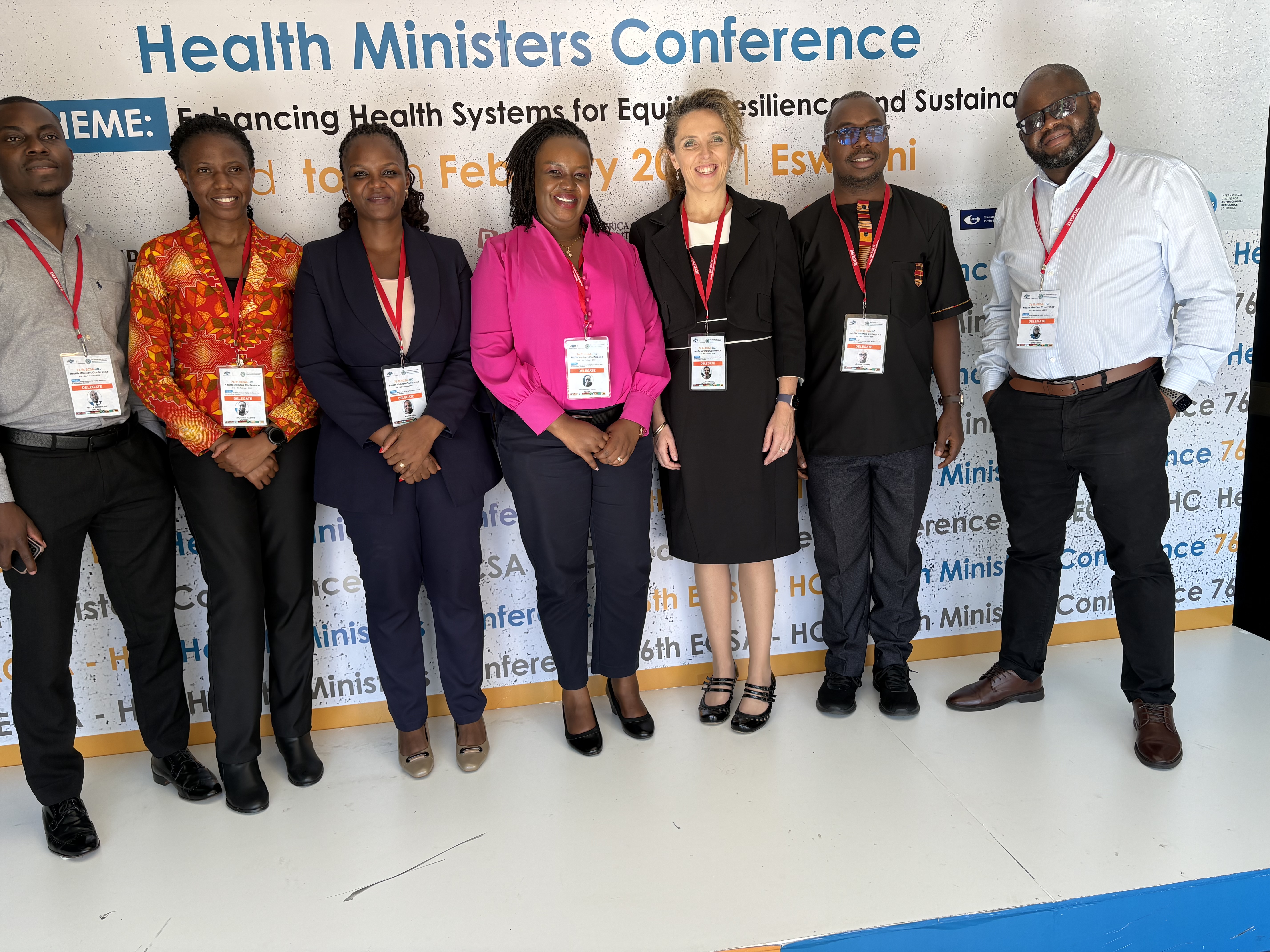
After the resolution was formally adopted by Ministers, CPA and its national partners gathered in Ezulwini for a ceremonial counter-signing of the ministerial resolution, affirming their commitment to carrying through the project and working in partnership to make the College a reality.
Beth Ward, CPA’s Strategic lead for Workforce Capability Building, said:
“We are thrilled and grateful that ECSA Health Ministers have recognised the impact that a College of Pharmacists would have on the region. Pharmacists have an absolutely critical role to play in tackling public health threats like antibiotic resistance and in managing many of the non-communicable diseases that increasingly challenge ECSA communities, but have limited access to the kind of advanced training opportunities available to doctors and nurses despite being on the frontline of patient care. The College would bring training opportunities in leadership, advanced skills and clinical expertise in line with other professions, driving improvement across health systems and strengthening the safe, effective, and sustainable use of life-saving medicines.”
Gift Chakera, President of the Pharmaceutical Society of Zimbabwe, said:
“The 76th ECSA-HC Health Ministers Conference represents a huge milestone moment for our profession. CPA’s successful advocacy efforts to secure endorsement for the establishment of a Regional College of Pharmacists will harmonise training and recognition across ESCA countries, ensuring consistent competencies for AMR management, and will facilitate cross-border collaboration in surveillance and regulation. We congratulate CPA on their advocacy efforts and offer our sincere gratitude to the ECSA-HC Health Ministers and all supporting partners.”
William Mpute, President of the Pharmaceutical Society of Malawi, said:
“A specialised pharmacy workforce will play an integral role in delivering optimal pharmaceutical care to Malawians and contribute to the efforts of the Malawi government in achieving Universal Health Coverage. An ESCA-HC School of Pharmacists offers an effective means to address the current and future needs in the pharmaceutical sector and the health sector at large.”
With Ministerial backing for the idea secured, the next step for the proposal’s champions is to develop a concrete framework for the College’s structure, educational offering and funding mechanisms, working in partnership with the ECSA-HC Secretariat to do so.
NOTES TO EDITORS
For a list of quotes from all participating NPAs, please see here.
The East, Central and Southern African Health Community (ECSA-HC) was established in 1974 to foster and strengthen regional cooperation and capacity to address the health needs of the member states. ECSA-HC works across its nine member states of Kenya, Lesotho, Malawi, Mauritius, Eswatini, United Republic of Tanzania, Uganda, Zambia and Zimbabwe to raise regional health standards through cooperation, collaboration, research, capacity building, policy development and advocacy. The 76th ECSA-HC Health Ministers Conference (HMC) took place in Ezulwini, Kingdom of Eswatini, from 3–5 February 2026, focusing on equitable, resilient, and sustainable health systems.
The Commonwealth Pharmacists Association (CPA) is an Accredited Organisation of the Commonwealth and a leading member of the Commonwealth Health Professions and Partners Alliance. Since 1969, CPA has been spearheading projects that upskill pharmacists, strengthen health systems, enhance access to pharmacy services and improve quality of care. Through its work for and on behalf of Commonwealth Pharmacy, CPA improves health outcomes on a global scale. Its membership consists of the National Pharmacy Associations of the Commonwealth or their equivalent bodies, plus thousands of individual pharmacists committed to developing the pharmacy profession at a global level.
The UK Department of Health and Social Care (DHSC)'s Fleming Fund is a UK International Development programme partnering with more than 30 countries across Africa, Asia-Pacific and the Caribbean to tackle antimicrobial resistance (AMR), a leading contributor to deaths from infectious diseases worldwide. It funded CPA for two global health programmes between 2019 and 2026, working in more than 20 countries, with a focus on 8 core African countries including Ghana, Kenya, Malawi, Nigeria, Sierra Leone, Tanzania, Uganda and Zambia. One of these programmes, CwPAMS, was delivered in partnership with Global Health Partnerships (formerly THET).
Elizabeth ‘Beth’ Ward is the Strategic Lead for Workforce Capability Building at the Commonwealth Pharmacists Association where she has led the development of the CPA Academy, the Association’s pan-Commonwealth empowerment hub and CPD offering for pharmacists in more than 30 participating countries. Prior to this role, Beth was the Associate Director of Education at the Royal Pharmaceutical Society (RPS). There she led the Education Delivery Strategy, including a partnership with the Royal College of General Practitioners to deliver England’s Community Pharmacist Consultation Service Training programme and the multi-professional Joint Royal College Medication Safety Education Series.
Press release distributed by Pressat on behalf of Commonwealth Pharmacists Association, on Thursday 5 February, 2026. For more information subscribe and follow https://pressat.co.uk/
Medical Education Pharmacy Pharmaceutical Pharmacists Commonwealth Commonwealth Of Nations Global Health Healthcare Education Training Charities & non-profits Education & Human Resources Government Health Medical & Pharmaceutical Public Sector & Legal
Published By
+447796390254
pete@petegaffney.co.uk
https://commonwealthpharmacy.org
Visit Newsroom

You just read:
International pharmacy body, national associations win backing from governments to develop new African College of Pharmacists
News from this source: