
First baby beavers in 400 years born in Scotland’s ‘most beautiful glen’
“These beaver kits symbolise a wildlife success story four centuries in the making"
The first beaver kits in 400 years have been born in world-famous Glen Affric in the Scottish Highlands, as part of a successful reintroduction project by rewilding charity Trees for Life and government agency Forestry and Land Scotland (FLS).
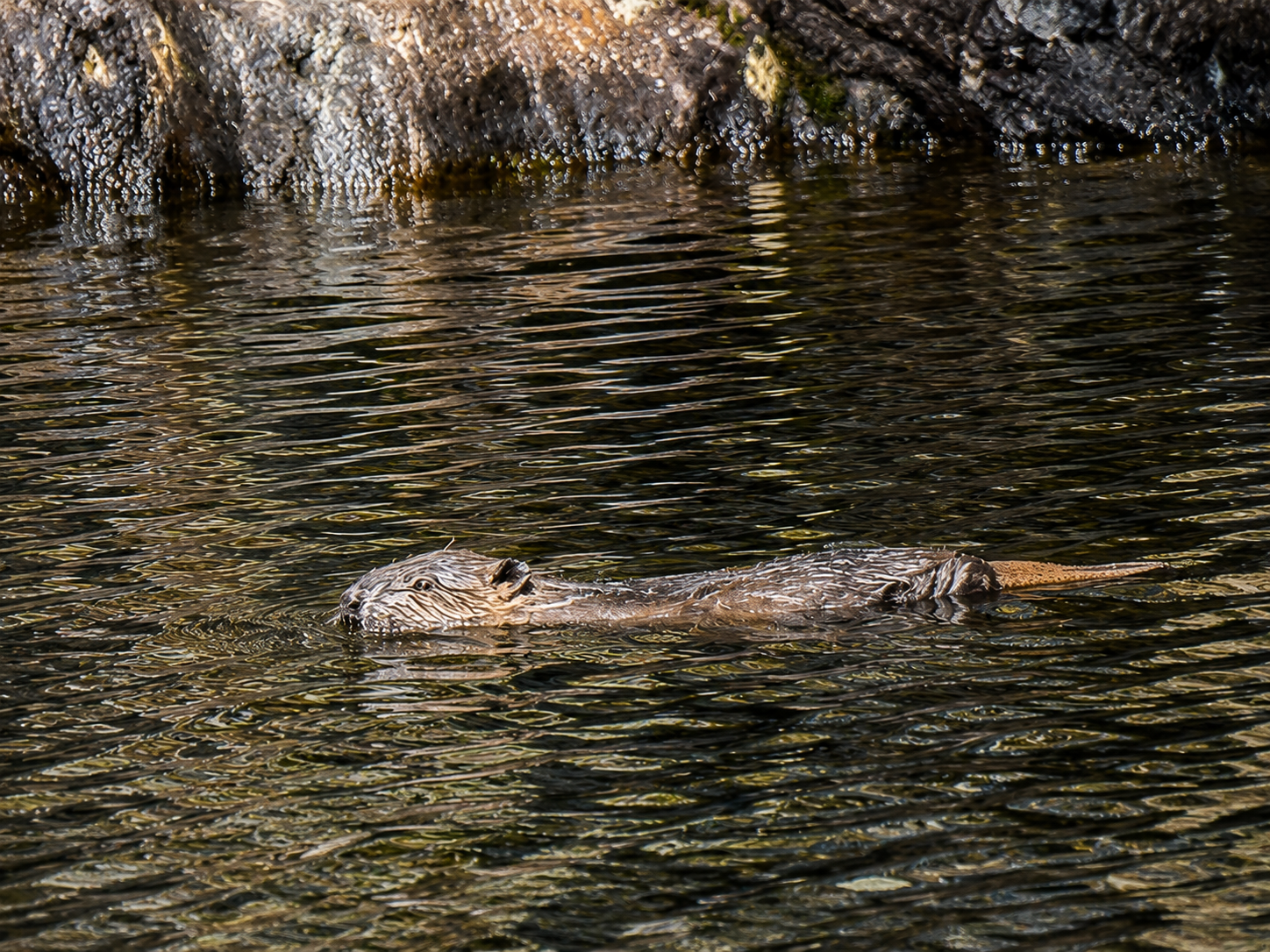
There are known to be at least two baby beavers in Loch Beinn a Mheadhoin in the glen, often described as the most beautiful in Scotland. Both kits appear to be healthy and thriving.
Nocturnal and shy, beavers can be hard to spot in the wild. But images of the kits – including one playing alongside its mother – have been captured by wildlife cameras as part of Trees for Life’s monitoring work.
The kits are likely to have been born in May or June, before first emerging from the beavers’ lodge into the outside world during the past few weeks.
“These beaver kits symbolise a wildlife success story four centuries in the making, and how nature can recover when we give it a chance,” said Tobias Leask, Trees for Life’s locally based Beaver Management Officer, who has also been able to film the kits from a canoe.
“Seeing them for the first time is something I'll never forget. It was one of those rare moments when you realise you're witnessing history.
“These young animals represent the first generation of beavers that will help shape Glen Affric's future – creating wetlands that support countless other species, improve water quality and build resilience to climate change. It's a wonderful milestone for everyone involved in the project.”
The birth of the kits follows the release of a first family of five beavers and a beaver pair at two sites on the loch in Glen Affric National Nature Reserve last October, and the release of a further family of four beavers in February.
The 11 beavers were relocated under licence by NatureScot from agricultural land in Tayside, following an application by FLS, which manages the 17,604-hectare reserve.
FLS and Trees for Life began work on the reintroduction initiative in 2022, supported by Beaver Trust, which hasplayed a key role in carrying out the releases. The project included three phases of extensive consultations with local communities and land managers, and features strong local community volunteer involvement.
The project helps to deliver Scotland’s national beaver strategy, as well as a Scottish Government directive for public agencies to seek beaver reintroductions on state-owned land out of existing beaver range.
Dr Roisin Campbell-Palmer, Head of Restoration at Beaver Trust, said: “The arrival of these kits is a very encouraging indication that the beavers have settled well into their new surroundings and are establishing themselves as a healthy, breeding population. Every reintroduction requires careful planning and close monitoring after release, so it is hugely rewarding to see the animals adapting so successfully.
“This achievement reflects the commitment and collaboration of everyone involved and provides further evidence that well-managed translocations can support the responsible restoration of beavers across Scotland in line with the Scottish Government’s National Beaver Strategy.”
Beavers create wetlands that benefit other wildlife, purify water and reduce flooding. The animals can bring economic benefits to communities through eco-tourism.
Sometimes the species can also create localised problems. The Glen Affric project partners have put in place measures to address these quickly should they emerge, with ongoing engagement to ensure local people can enjoy and benefit from the beavers’ return.
Tobias Leask has also established a volunteer group of local people who monitor how the beavers are settling in and their activity, so that the wider community can be kept up to speed on how the animals are getting on. Almost 30 people from across the area have already joined the group, and more volunteers are welcome.
Now a protected species, the Eurasian beaver was once widespread in Scotland until hunted to extinction for its pelt, meat and musk oil. Records indicate beavers may have survived in the country in small numbers until the 16th century. They were reintroduced to Scotland in 2009.
Glen Affric contains one of the best, and third largest, examples of the globally unique Caledonian forest that once covered much of the Highlands, but which is now reduced to less than 2% of its original extent. Trees for Life has been working with FLS and others for more than 30 years to restore the forest and its native wildlife. See treesforlife.org.uk.
Ends
Press release distributed by Pressat on behalf of Trees for Life, on Wednesday 29 July, 2026. For more information subscribe and follow https://pressat.co.uk/
Beavers Scotland Rewilding Nature Climate Biodiversity Highlands Charities & non-profits Environment & Nature Farming & Animals

You just read:
First baby beavers in 400 years born in Scotland’s ‘most beautiful glen’
News from this source: