
Civil Air Support supports major multi-agency operation to protect pilot whales in Thames Estuary
Civil Air Support (CAS) has supported British Divers Marine Life Rescue (BDMLR) and the Port of London Authority (PLA) in a major multi-agency operation to monitor and protect a pod of around 25 long-finned pilot whales which entered the Thames Estuary.
The unusual presence of the whales in the tidal Thames created a significant risk of stranding, particularly as the pod moved into increasingly shallow and confined waters around Gravesend, Tilbury and Rochester.
Working under the existing Memorandum of Understanding between Civil Air Support and BDMLR, CAS was able to provide both specialist rescue logistics and aerial observation capability at short notice.
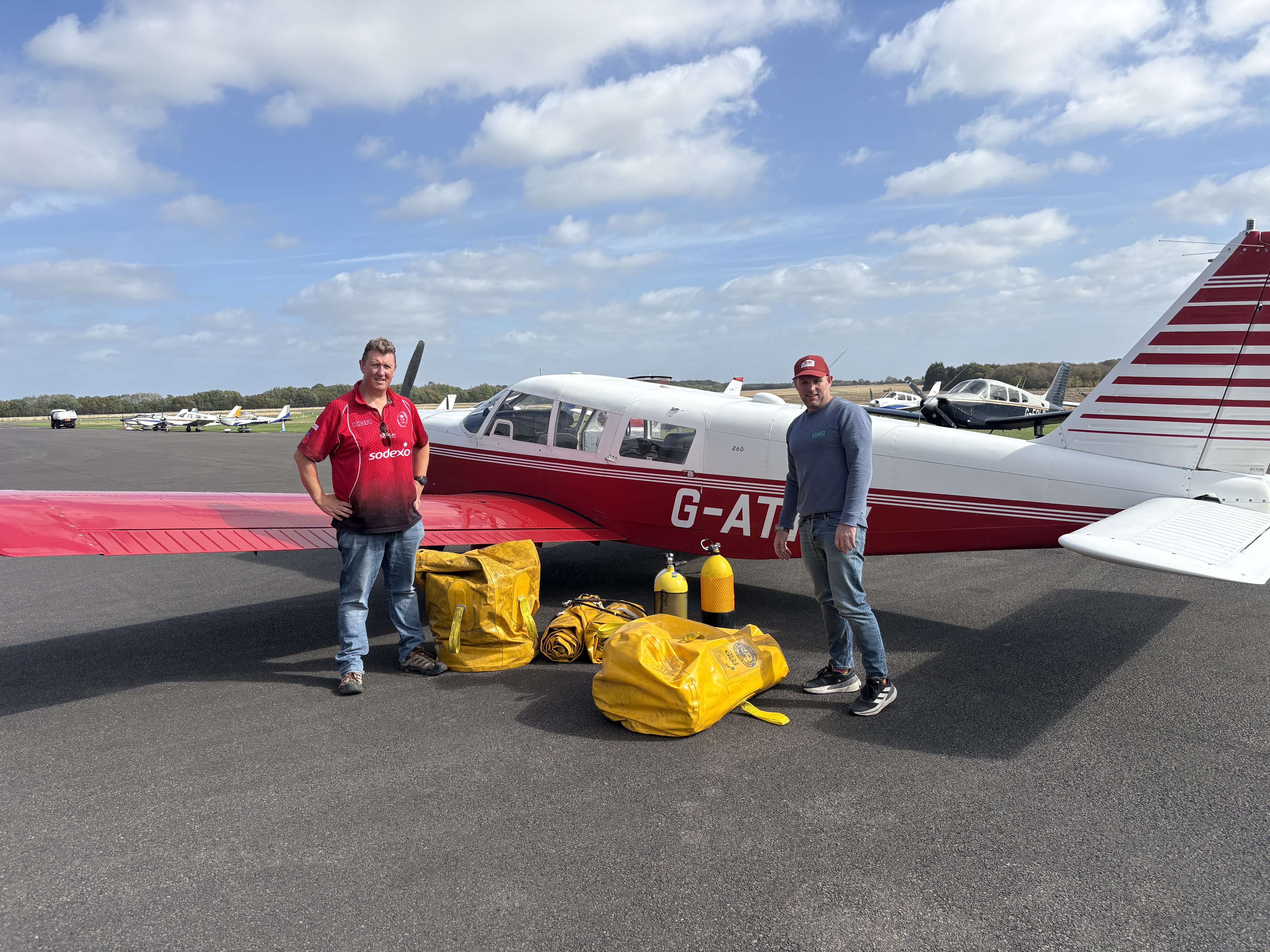
When the risk of stranding increased on Friday, CAS rapidly moved a specialist whale rescue kit from one of its bases at Turweston Aerodrome to Rochester. The equipment, which is normally held at Turweston as part of CAS’s wider national capability, was transported by air in a PA-32 Cherokee Six and made available to BDMLR’s Marine Mammal Medics within hours.
The equipment comprises two large inflatable pontoons and a heavy-duty tarpaulin. If a whale strands, trained BDMLR medics can manoeuvre the animal onto the tarpaulin, attach the pontoons and gradually inflate them using compressed air. This helps relieve pressure on the animal’s lungs and allows it to be carefully refloated and moved towards deeper water.
The decision to pre-position the equipment proved important. Later that day, one of the whales separated from the pod and stranded near Rochester, allowing BDMLR to deploy the equipment immediately.
Meanwhile, the PLA and BDMLR undertook a carefully coordinated operation to encourage the main pod back towards the North Sea. A flotilla of boats slowly followed the whales from the Thames Estuary, taking around six hours to guide them more than 20 nautical miles towards the outer estuary and open sea.
CAS subsequently launched aerial observation missions to help establish whether the whales were continuing out to sea or turning back towards the estuary.
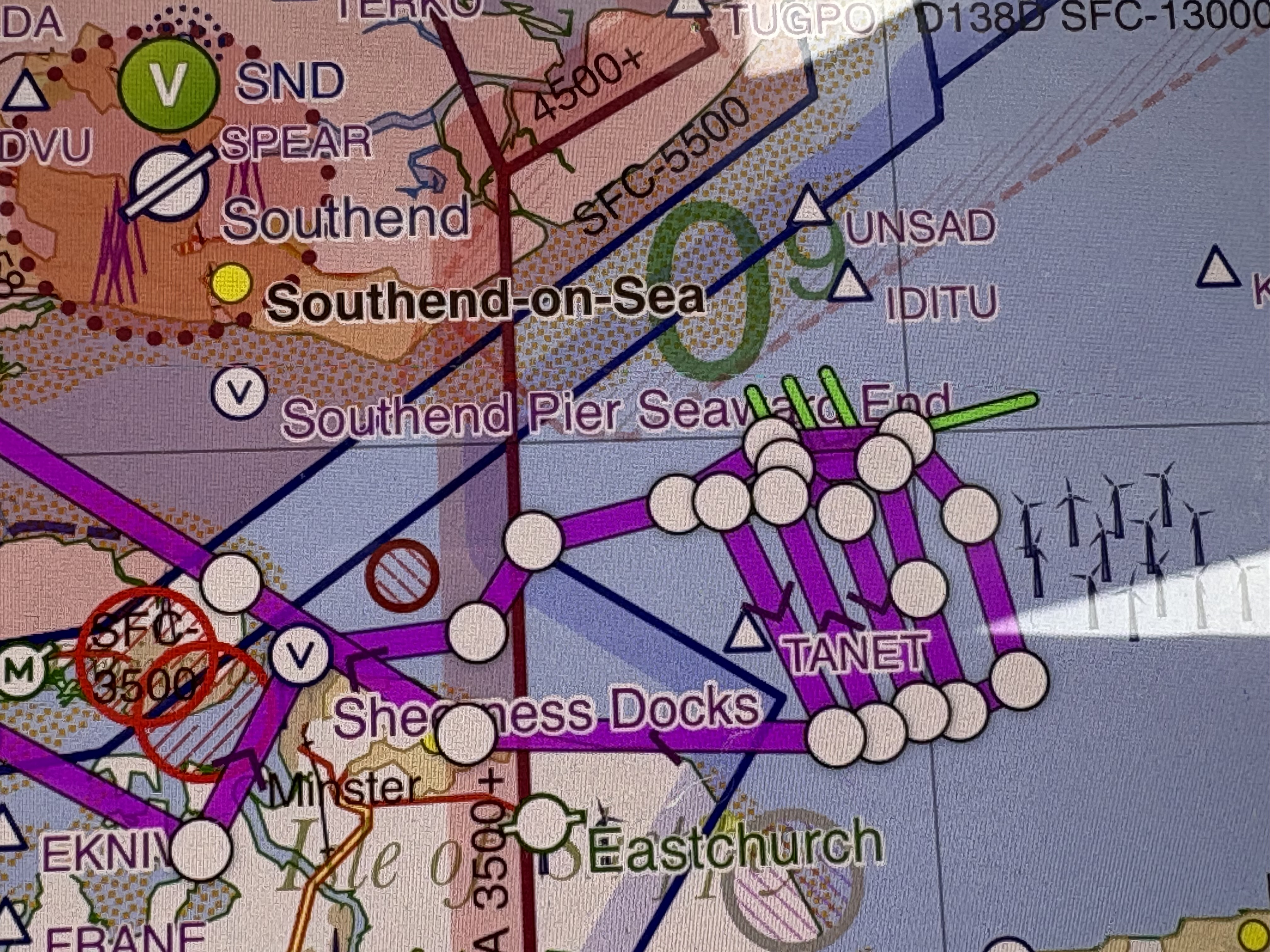
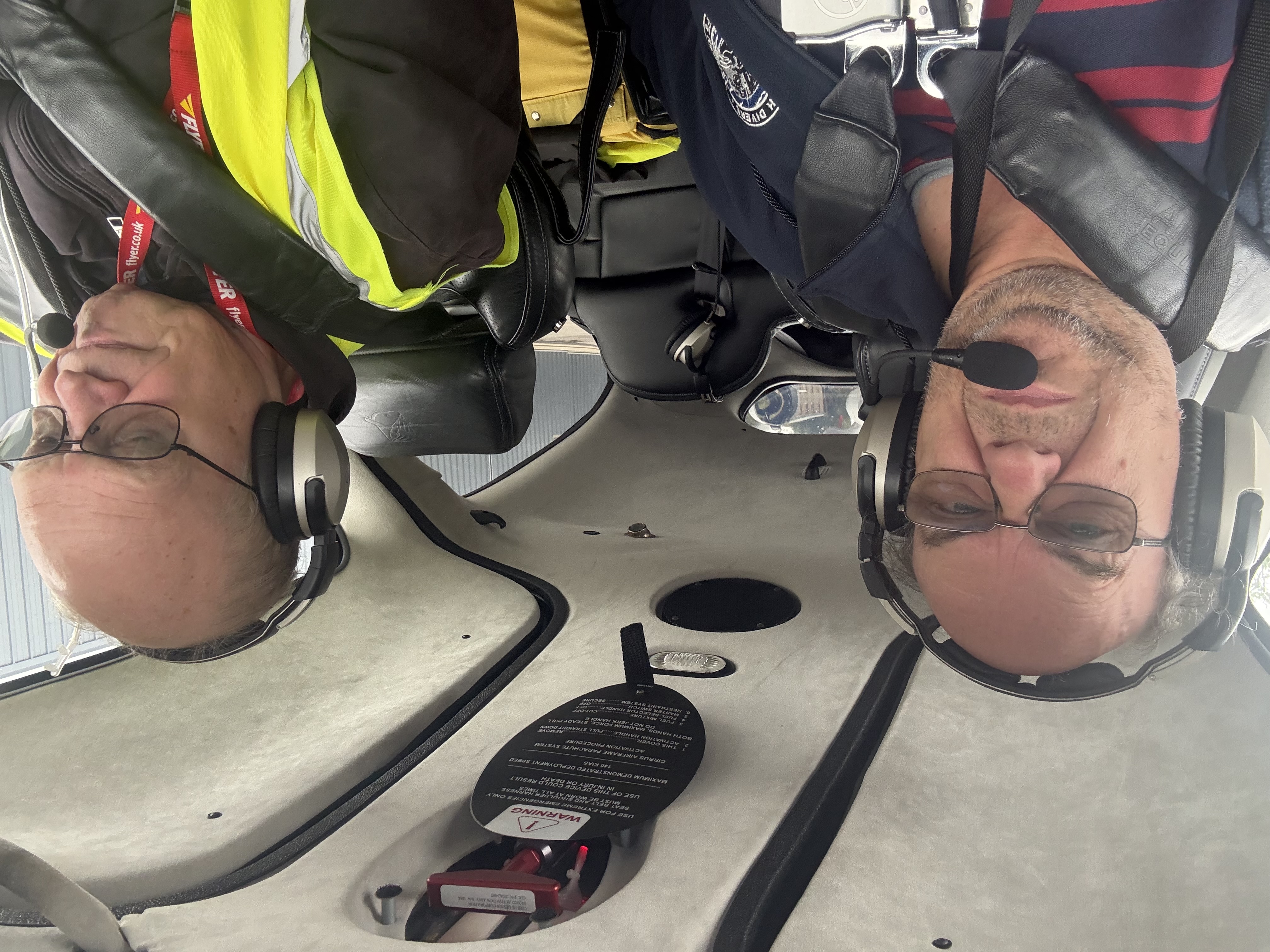
On Saturday afternoon, a CAS aircraft and crew conducted an observation flight over the estuary and surrounding coastline. A further mission was mounted on Sunday morning, with an aircraft operating from Biggin Hill and carrying a CAS observer together with a BDMLR whale specialist.
The Sunday flight covered the Medway Estuary, the Southend area, London Gateway and the waters towards the wind farms, as well as searching relevant coastline and shallow-water areas for any stranded animals. No further members of the main pod were sighted during the flight.
The operation illustrates the value of close cooperation between specialist organisations and the ability to bring together different capabilities quickly when circumstances change.
Graham Mountford, Transport Operations Manager for Civil Air Support, said:
“This was a very good example of how CAS can support a specialist organisation such as BDMLR when a situation develops rapidly. Because we have an MoU in place and already understand each other’s capabilities, we were able to respond quickly without having to establish relationships or processes from scratch.
“We were able to move specialist rescue equipment from Turweston to the operational area within hours and then provide aircraft and crews for aerial observation as the situation developed.
“The strength of CAS is that we have pilots, observers and aircraft distributed around the UK. That means we can often put together the right combination of people, aircraft and specialist experience at relatively short notice, wherever it is needed.”
The operation also demonstrated the importance of having specialist equipment distributed geographically. BDMLR maintains rescue equipment in different locations around the UK, while CAS holds an additional whale and dolphin refloatation set at Turweston Aerodrome which can be transported to more remote locations when required.
Graham explained:
“In a mass stranding situation, time is critical and the more rescue equipment that can be brought to the site, the greater the potential to help the animals. CAS has supported BDMLR in the past by bringing equipment together from different parts of the country, and this incident was another example of how that capability can be used.”
BDMLR’s latest update thanked the organisations involved in the response and specifically recognised Civil Air Support for assisting with the transfer of additional rescue equipment and for continuing aerial searches for the remaining pod.
The response involved a wide range of organisations, including BDMLR, the Port of London Authority, Civil Air Support, Coastguard teams, Kent Fire and Rescue Service and other local responders. BDMLR’s marine mammal specialists remained responsible for assessing the whales and determining the appropriate welfare response, while the PLA coordinated activity on the water.
Sadly, two whales from the wider incident died. One female was found deceased near East Tilbury on Saturday, while another female which had separated from the pod was subsequently found deceased at Canvey Island. BDMLR is working with the Cetacean Strandings Investigation Programme to recover the animals for post-mortem examination.
Despite the tragic loss of individual animals, the response demonstrated the importance of preparation, specialist expertise and effective coordination when marine wildlife is at risk.
For Civil Air Support, it was also a practical demonstration of the organisation’s ability to integrate rapidly into a complex multi-agency operation – providing aircraft, trained crews, specialist logistics and aerial observation wherever they are most needed.
As BDMLR continues to monitor the situation, Civil Air Support remains available to provide further aerial support if required.
Press release distributed by Pressat on behalf of Civil Air Support, on Monday 21 September, 2026. For more information subscribe and follow https://pressat.co.uk/
CAS BDMLR Whale Stranding Port Of London Authority Pilot Whales Charities & non-profits Environment & Nature


You just read:
Civil Air Support supports major multi-agency operation to protect pilot whales in Thames Estuary
News from this source: