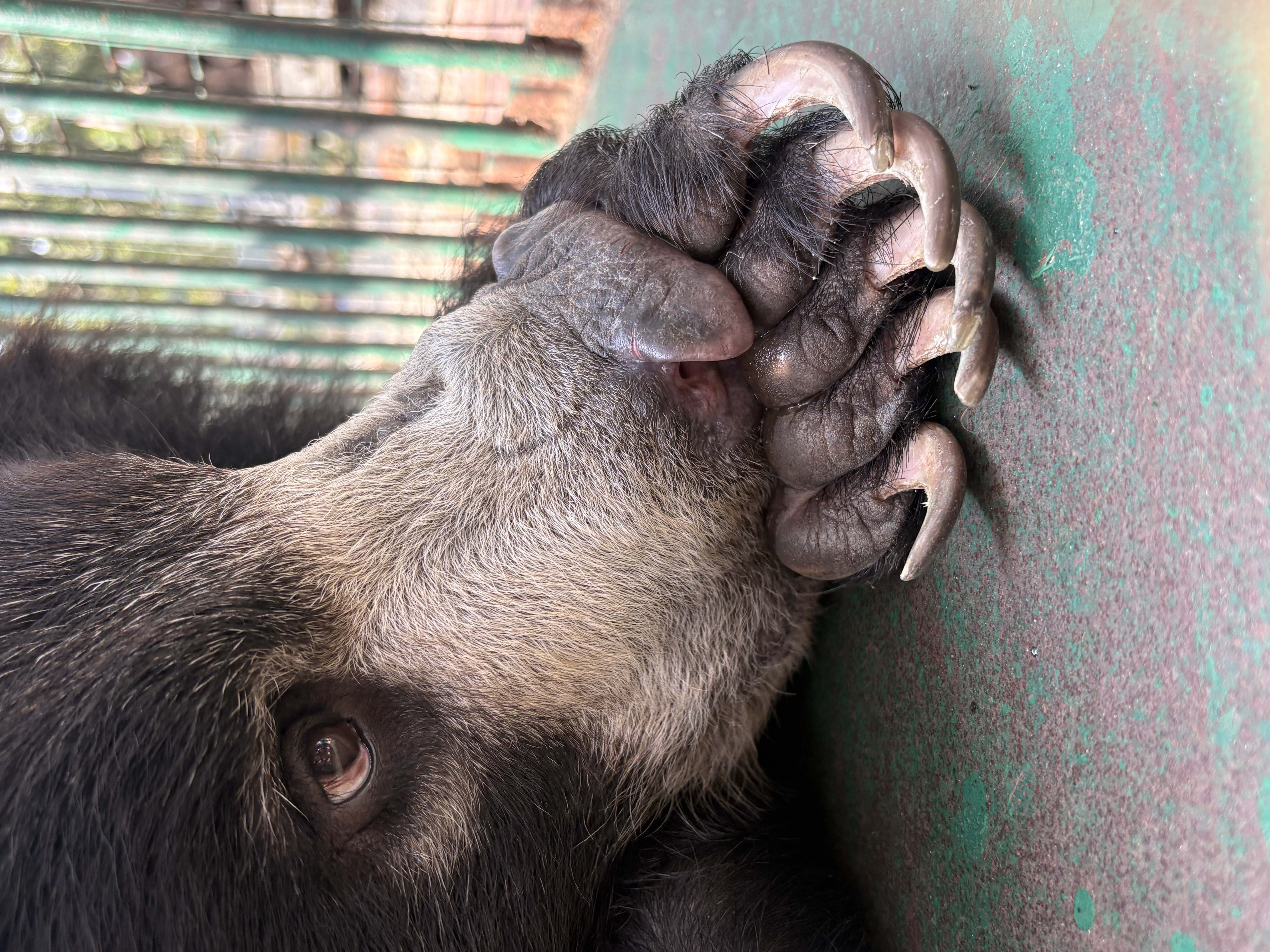
World Wildlife Day Warning: as rescued baby bear Lissy sends a stark message about vigilance against the wildlife trafficking trade.
Monday 2 March, 2026
The dancing bear trade ended in 2009, so this World Wildlife Day, 3rd March, why are we writing about another bear cub rescued in recent months? Progress has been made, but poachers persist in the wildlife trafficking trade.
International Animal Rescue is calling for continued support against wildlife trafficking on World Wildlife Day after a young sloth bear cub, Lissy, was rescued from the illegal ‘dancing’ bear trade 17 years after it was officially eradicated.
The three-year-old cub was rescued from the Jharkhand–West Bengal border following a tip-off to forest officials. Spotting their approach, the trafficker threw the cub onto the floor before running off.
The baby bear, named Lissy, had gruesome injuries. Her muzzle had been pierced, and a rope had been forced through it, and her canine teeth had been smashed out. She was emaciated and thirsty. Her injuries are a trademark of the horrific dancing bear trade, which forces cubs away from their mothers and tortures them into ‘performing’ in agony. Lissy’s injuries reflect why this practice was outlawed in 1972 and eradicated fifteen years ago.
In 2009, after many years of hard work from both International Animal Rescue and Wildlife SOS, more than 620 bears had been rescued and taken into sanctuary. So why was another cub still trafficked?
Alan Knight OBE, President of International Animal Rescue, said:
“We cannot become complacent. We thought that the dancing bear trade had stopped, but this latest rescue proves otherwise, as traffickers are still attempting to sneak bears across borders. We named her Lissy, after our beloved colleague Lis Key, who spent her career working to end this practice. I know she’d be proud to see this cub, which is now safe and happy. We are calling for support to increase vigilance and to raise awareness.”
Native to South Asia, sloth bears (Melursus ursinus) are classified as Vulnerable and continue to face threats from habitat destruction, poaching and illegal trade.
This World Wildlife Day, International Animal Rescue is asking for support to continue enforcement, maintain cross-border vigilance and urge the public to help prevent this torturous trade from happening again as well as supporting Lissy bear.
To help us keep up the fight against wildlife traffickers, please visit:https://www.internationalanimalrescue.org/animals/indian-sloth-bear
Distributed by Pressat