Real or fake? Online Animal Cruelty. International Animal Rescue shares useful guide for SMACC ‘Report It’ week
Monday 21 September, 2026
‘Report It! Week’ from 21st to 27th September is a collective campaign to help people recognise and report animal cruelty online. Online animal cruelty rarely looks like cruelty at first glance. It is often dressed up as comedy, cuteness, or rescue, designed to earn views, shares, and money.
Led by the Social Media Animal Cruelty Coalition (SMACC) to raise awareness of online animal cruelty and encourage people to respond responsibly when they encounter harmful animal content online.
This year's theme reminds every viewer that the choices we make online have real consequences for real animals.
REPORT IT! WEEK 2026 runs from September 21 - 27, 2026, where SMACC are asking people to #ReportIt2EndIt and invites the global community to pause before reacting, question what's behind the content, and take the one action that actually helps: reporting it through the proper channels.
- BE AWARE
- DON’T ENGAGE
- REPORT IT!
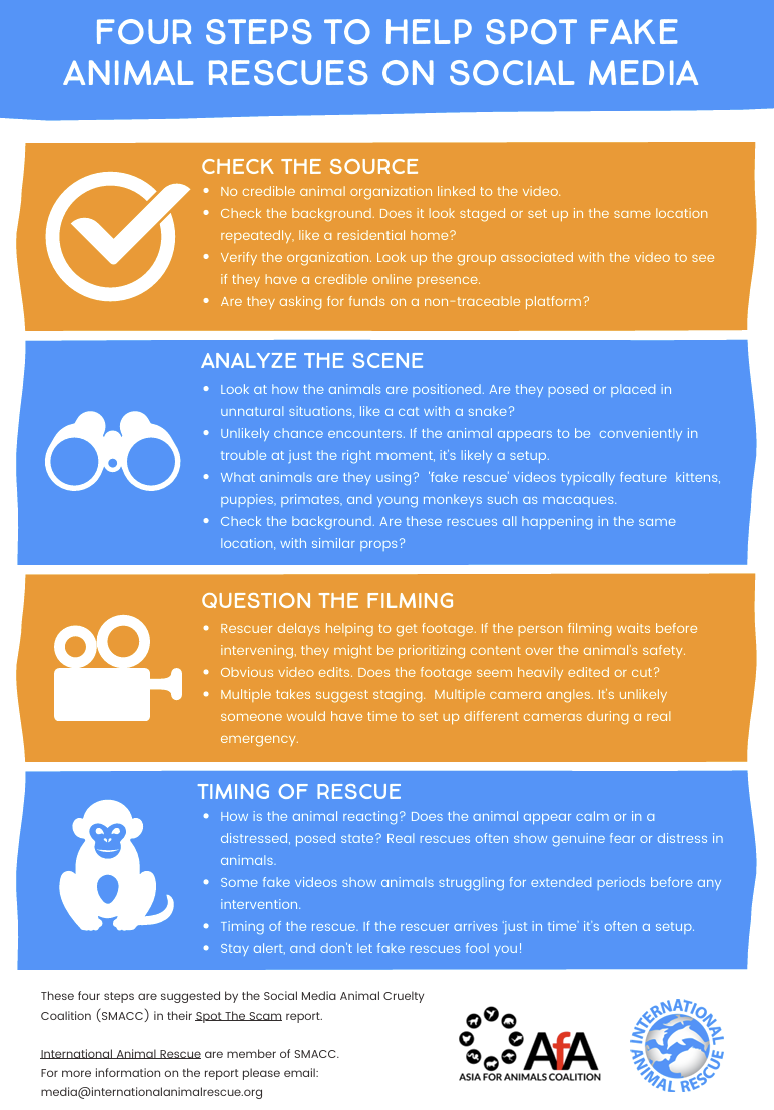
SMACC advises that viewers look for indicators of fake rescue and to report such content directly to the platforms. Do not watch, engage or share the content. But the first step is how to recognise such content?
International Animal Rescue has developed a four-step guide to help people spot fake animal rescues on social media, so that they can then report the content, the first step in stamping out online animal cruelty.
Fake Rescue content shows animals in situations of immense danger; abandoned on the streets, buried alive or trapped in objects, being attacked by predators, and in need of medical attention.
Kittens, puppies and young monkeys are predominantly used, presumably due to the availability of these animals and the ease of handling them. Cats were the most featured animal, in 42% of videos, followed by primates, dogs, snakes and turtle species.
The content appears to be a genuine rescue of an animal in need, with many creators mimicking the design and content of real animal rescue organizations, members of the public are being tricked into donating to these fake accounts, and genuine rescue organizations are missing out.
Commenting on ‘Report It Week’, International Animal Rescue’s CEO, Gavin Bruce, said: “The cruelty for clicks through setting up of fake rescues is a particularly sickening way to exploit animals for cash. The fact it plays on the compassion and kindness of an unaware online viewer eager to see the poor animal saved from harm, makes it even more vile an act. By raising awareness of how to spot a scam, we hope we can help to identify and remove this type of content.”
To see International Animal Rescue’s four-step guide to help people spot fake animal rescues on social media, click here: https://www.internationalanimalrescue.org/sites/default/files/2024-10/IAR Spotting Fake Rescues.pdf
Together, we can end cruelty online. #ReportIt2EndIt
Distributed by Pressat