
* For more information regarding media usage, ownership and rights please contact
Eye Health UK.

The largest observational study of its kind reveals more than 1.2 million motorists are driving on Britain’s roads with defective eyesight.[1]
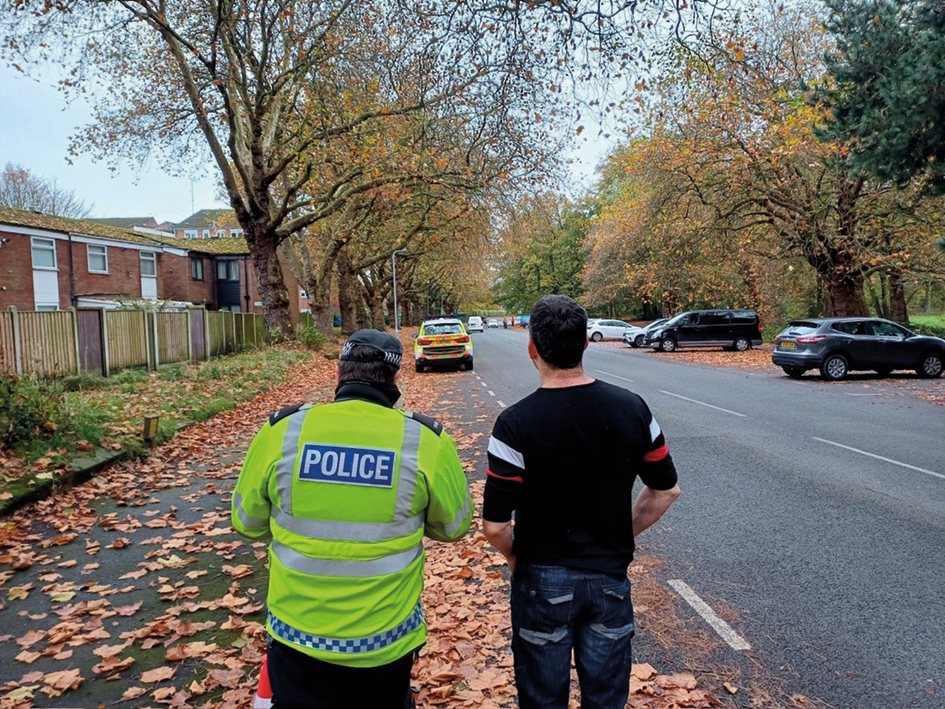
The Is Your Vision Roadworthy? roadside vision screening survey conducted as part of a collaboration between University of Warwick, the Older Drivers Forum and Eye Health with support from National Police Chiefs' Council (NPCC), exposes significant concerns about vision standards among motorists.
Thirty-two police forces across England, Scotland and Wales conducted number plate eyesight tests on 3,778 drivers[2], revealing:
To drive a car or motorcycle (Group 1) in the UK, you must be able to read a car number plate from 20 metres in good daylight (using glasses or contact lenses if you need them). The legal driving eyesight standards also require motorists to reach at least 6/12 on the Snellen scale and have adequate fields of vision. Acuity and visual fields can be measured by your optometrist during a routine sight test.
Worryingly, almost a third (31.5%) of motorists admitted they hadn’t had an eye test in the last two years, as recommended. This figure rose to 42% in motorists who failed the number plate test. One-third of drivers needed corrective lenses for driving, but many weren’t wearing them.
Dr. Carol Hawley of Warwick Medical School, who analysed the data and wrote the report, commented, "While most drivers passed, 105 required eyesight-related advice, and 59 drivers failed outright. Some of those who failed the number plate test avoided a driving ban only because they had corrective glasses available to pass a second attempt."
One driver reported for an eyesight offence failed the number plate test at 7.4 metres (instead of the required 20 metres), but later passed when wearing glasses he should have had on when driving.
David Cartwright, optometrist and chair of Eye Health UK explains why good vision is essential for safe driving: “As much as 90 per cent of information needed for driving is visual. Even a minor reduction in vision can slow reaction times and impair your ability to recognise hazards or judge speed. It can also cause fatigue and affect contrast sensitivity. Having regular eye tests, every two years or sooner if you notice a change in your vision is essential to keep you and other road users safe.”
The survey also highlighted an increased failure rate among older drivers, with 7.3% of motorists aged over 80 failing the roadside vision screening.
Rob Heard MBE, founder of the Older Drivers Forum, added, "Age needn’t be a barrier to staying safe on the roads. Peoples’ sight deteriorates gradually, often without them being aware and often without them realising their sight may have fallen below the legal limit.
Regular sight tests with an optometrist are an effective way of not only making sure we are safe to drive on the road, but also detecting medical conditions early so they can be treated, potentially extending a person’s driving career.”
Thirteen people were killed on UK roads in 2024[3]
and around 3,000 are seriously injured every year[4]
due to drivers or riders with uncorrected or defective eyesight.
Chief Constable Jo Shiner, NPCC Lead for Roads Policing, concluded, "“Personal responsibility is the starting point for safer drivers. Making sure your eyesight meets the standards of vision for driving is really important and something only you can do. If you have any doubts whatsoever about your sight please see an optician, this will keep you and all other road users safe while you are driving.”
Essential advice for keeping your vision roadworthy:
For practical advice and information about keeping vision roadworthy as well as information about the legal eyesight standards and eye conditions that need to be notified to the DVLA / DVA visit IsYourVisionRoadworthy.org.uk
ENDS
For further press information, interviews and photography contact:
Rachel Robson, T. 07986 056380 E. [email protected]
Notes to Editors:
Click here for a copy of the full report.
Uncorrected defective eyesight is punishable with a fine of up to £1,000, three penalty point and possible disqualification.
The National Police Chiefs' Council (NPCC) is a national coordination body for law enforcement in the United Kingdom and the representative body for senior police officers in the United Kingdom.
About the University of Warwick Founded in 1965, the University of Warwick is a world-leading institution known for its commitment to era-defining innovation across research and education. A connected ecosystem of staff, students and alumni, the University fosters transformative learning, interdisciplinary collaboration and bold industry partnerships across state-of-the-art facilities in the UK and global satellite hubs. Here, spirited thinkers push boundaries, experiment and challenge convention to create a better world.
The Older Drivers Forum
is a not-for-profit organisation run by volunteers to support mature motorists on how to continue driving safely for longer.
Eye Health UK (registered charity number: 1086146) is the leading UK charity for prevention of poor eye health.
[1] Calculated using Department for Transport Driving Licence Data by nation and age.
[2] During NPCC’s Operation Dark Night (Monday 27th October to Sunday 09 November 2025) thirty-two police forces across England, Scotland and Wales submitted valid data for 3,778 roadside eyesight checks on behalf of the Is Your Vision Roadworthy? initiative. Motorists were asked to read a car number plate from 20 metres, wearing any glasses worn when stopped.
[3] Department for Transport (DfT) figures
[4] BRAKE, road safety charity.
Distributed by Pressat