https://pagepeek.ai/blog/from-draft-to-distinction-how-to-grade-my-essay
* For more information regarding media usage, ownership and rights please contact
PAGEPEEK LTD.
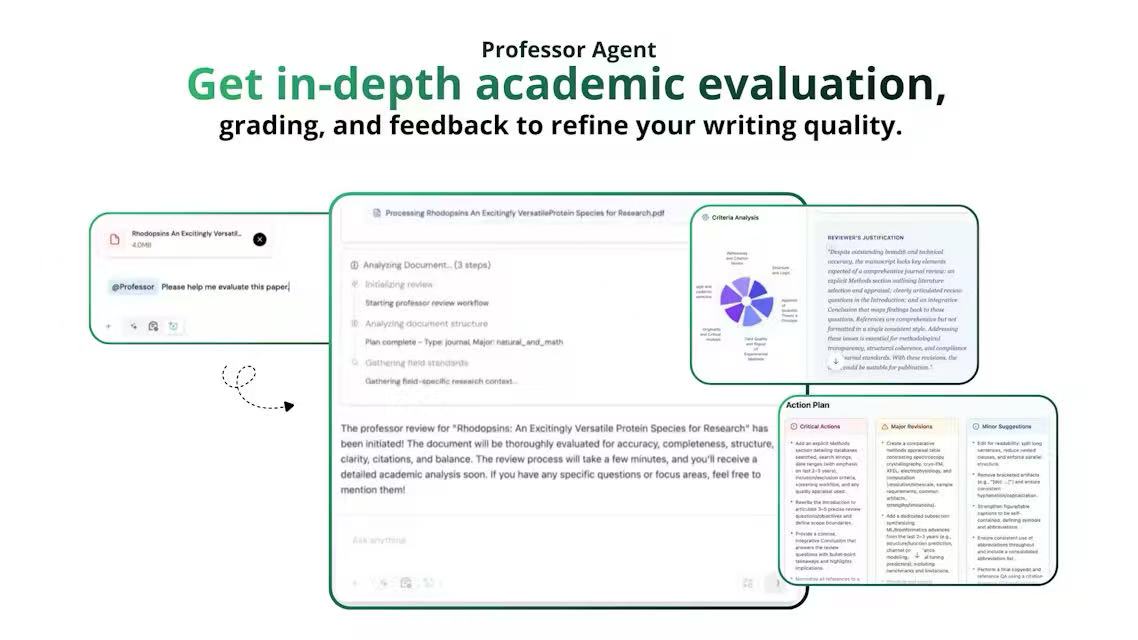
As academic standards continue to rise globally, students are increasingly turning to digital tools to grade my essay before submission. The motivation goes beyond predicting a score. Students want to understand how their work will be assessed, whether their arguments are coherent, and if their writing meets academic expectations.
Historically, this level of feedback required time-consuming tutor consultations. Today, advances in educational technology are reshaping pre-submission assessment, allowing students to evaluate their essays earlier and more systematically.
Academic assessment has long focused on more than spelling and punctuation. Studies on higher education grading consistently show that thesis clarity, logical flow, and argument coherence are among the strongest predictors of final grades.
Despite this, many grade my essay free online tools still emphasize surface-level metrics such as sentence length or passive voice detection. While useful, these checks fail to reflect how essays are actually assessed by university markers.
Newer assessment approaches, including AI-based systems such as PagePeek, analyze essays at a structural level. Instead of treating writing as isolated sentences, they examine how ideas connect across sections and whether conclusions fulfill the promises made in introductions.
In formal academic assessment, evaluators often focus on elements that are difficult for students to self-diagnose, including:
Thesis alignment – whether the conclusion logically proves the initial claim
Paragraph relevance – whether evidence supports each topic sentence
Transition quality – whether readers are guided clearly through arguments
By identifying weaknesses in these areas, structural assessment tools aim to highlight issues that typically lead to lost marks, even when grammar is technically correct.
Traditional university feedback cycles can take weeks, often arriving too late to influence outcomes. AI-based assessment tools are changing this dynamic by enabling instant feedback and iterative revision.
This allows students to draft, assess, revise, and reassess their essays multiple times before submission. As a result, assessment becomes a learning process rather than a final judgment.
Beyond structure, academic proofreading plays a critical role in assessment outcomes. Unlike basic proofreading, academic-level review focuses on tone, objectivity, and disciplinary conventions.
This is particularly relevant for ESL students, who may express complex ideas using grammatically correct but stylistically inappropriate language. Advanced proofreading systems can identify tonal inconsistencies and suggest academically precise vocabulary, helping ensure that language barriers do not obscure analytical quality.
Inconsistent referencing remains one of the most common reasons for grade penalties. Minor errors in APA, MLA, or Chicago style citations can signal a lack of academic rigor.
Comprehensive academic proofreading includes automated citation checks, ensuring alignment with required style guides and reducing the risk of avoidable assessment deductions.
The phrase rewrite my essay is often associated with plagiarism concerns. However, ethical rewriting focuses on clarity rather than content generation.
Modern assessment-support tools emphasize human-in-the-loop editing, where rewrite suggestions are optional and author-controlled. This approach preserves the student’s original ideas and voice while improving readability, coherence, and flow.
By avoiding automated text spinning, these systems also reduce the risk of triggering AI-detection mechanisms increasingly used by academic institutions.
The growing popularity of grade my essay tools reflects a broader shift in academic assessment. Students are no longer seeking reassurance through predicted grades alone. Instead, they want insight into how their writing aligns with institutional standards and how it can be improved before formal evaluation.
As assessment practices evolve, tools that combine structural analysis, academic proofreading, and ethical rewriting are becoming integral to modern academic workflows.
Academic success depends not only on ideas, but on the ability to communicate them clearly and coherently. Digital assessment tools are transforming how students approach writing, moving assessment upstream in the academic process.
By enabling early evaluation, deep structural analysis, and precise language refinement, modern grade my essay solutions are redefining what effective academic assessment looks like in a digital-first education landscape.
Distributed by Pressat