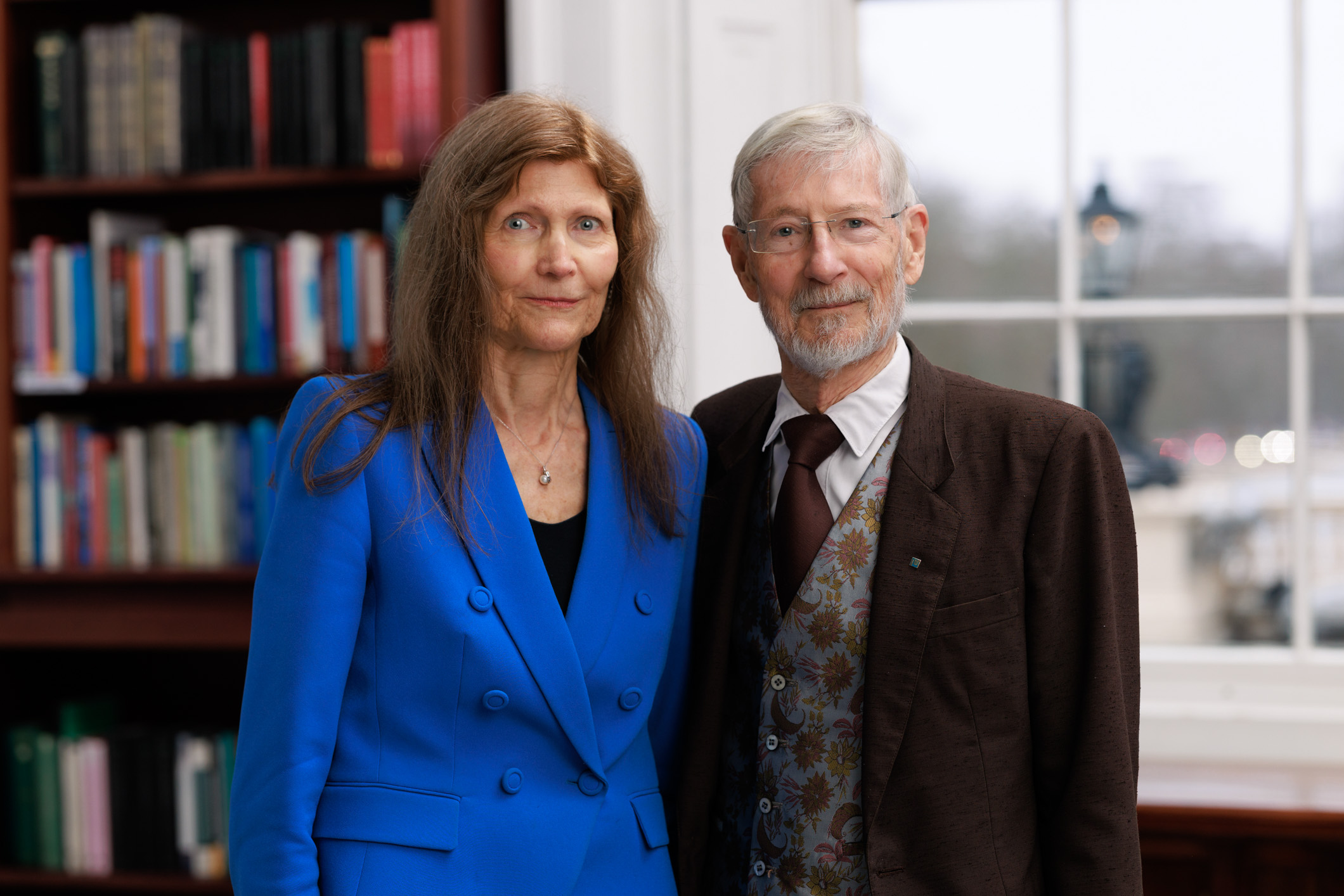
Cochlear Implant Pioneers and MED‑EL Founders Ingeborg and Erwin Hochmair Honoured with 2026 Queen Elizabeth Prize for Engineering
Friday 6 February, 2026
Cochlear Implant Pioneers and MED‑EL Founders Ingeborg and Erwin Hochmair Honoured with 2026 Queen Elizabeth Prize for Engineering
- One of the world’s most prestigious engineering awards recognises life‑changing medical innovation
- The 2026 award honours pioneering cochlear implant technology that has transformed hundreds of thousands of lives
- This achievement highlights decades of innovation at the intersection of engineering and medicine
February 3, 2026 – London, United Kingdom: MED‑EL celebrates a historic milestone: its founders, Ingeborg and Erwin Hochmair, have been named, together with other outstanding personalities, as Laureates of the 2026 Queen Elizabeth Prize for Engineering—one of the world’s most prestigious honours for life‑changing technological innovation.
The 2026 Queen Elizabeth Prize for Engineering recognises the design and development of modern neural interfaces—technologies that restore lost human functions—and the visionary engineers behind them.
Ingeborg and Erwin Hochmair are honoured alongside Graeme Clark and Blake Wilson for their groundbreaking contributions to cochlear implants, a technology that converts sound into electrical signals to directly stimulate the auditory nerve, restoring hearing to hundreds of thousands of people worldwide over the past four decades.
Pioneering Cochlear Implants That Changed Hearing Care Forever
Beginning in 1975 at the Technical University of Vienna, Austria, Ingeborg and Erwin Hochmair launched pioneering cochlear implant research that led to the world’s first microelectronic cochlear implant in 1977, marking a turning point in hearing technology. Their work drove critical advances in signal processing, implant miniaturisation, and long‑term biocompatibility, laying the foundation for today’s advanced cochlear implants.
By uniting rigorous engineering with deep clinical insight, the Hochmairs not only transformed hearing care but also paved the way for the founding of MED‑EL. Their vision continues to shape the company’s mission to deliver lifelong hearing solutions for people of all ages. With recent advancements such as TICI (Totally Implantable Cochlear Implant), MED‑EL continues to advance neural interface engineering, delivering even more personalised and lifelike hearing experiences.
Engineering Guided by Compassion and Scientific Integrity
“This honour recognises not only a technological achievement, but a belief we have held from the very beginning—that engineering, guided by compassion and scientific integrity, can fundamentally change lives,” says Ingeborg Hochmair, Co‑founder and CEO of MED‑EL. “Cochlear implants were once considered impossible by many. Today, they demonstrate what can be achieved when engineers, clinicians, and users work together with a shared purpose.”
Erwin Hochmair, Co‑founder of MED‑EL, adds: “From the earliest experiments, our goal was to create a neural interface that could work in harmony with the human auditory system over a lifetime. This recognition by the Queen Elizabeth Prize for Engineering affirms the importance of long‑term thinking, scientific persistence, and engineering solutions that truly serve people.”
Together with Ingeborg and Erwin Hochmair, the 2026 Queen Elizabeth Prize for Engineering (QEPrize) has been awarded to Graeme Clark, Blake Wilson, John Donoghue, Alim Louis Benabid, Pierre Pollak, Jocelyne Bloch, and Grégoire Courtine for the design and development of modern neural interfaces that restore human function.
The Laureates will share the £500,000 prize and collectively represent a new era in neuroengineering and neuroprosthetics, alongside parallel breakthroughs in brain‑computer interfaces, deep brain stimulation, and electronic spinal stimulation. Together, these innovations demonstrate the extraordinary potential of engineering to restore lost functions, independence, and dignity.
On Tuesday, 3 February, the 2026 Laureates were formally announced by Lord Vallance, Chair of the Queen Elizabeth Prize for Engineering Foundation, at the Science Museum in London.
Shaping the Future of Hearing Technology
For MED‑EL, this award is also a tribute to all hearing implant users worldwide whose experiences continue to inspire innovation, as well as the global community of engineers, researchers, clinicians, and partners advancing hearing technology.
“This recognition strengthens our resolve to keep pushing boundaries,” Ingeborg Hochmair states. “Our mission has always been to overcome hearing loss as a barrier to communication and quality of life. At MED‑EL, we will continue to invest in research, accessibility, and technologies that help people participate fully in life, wherever they are.”
--------
About the Queen Elizabeth Prize for Engineering
Diverse, multifaceted, and continually evolving, engineering creates solutions to global challenges and improves billions of lives. Engineers have enabled us to work together across the planet, explore the smallest cells and the most distant stars, and navigate our way through the world.
Awarded annually, the Queen Elizabeth Prize for Engineering (QEPrize) champions bold, groundbreaking engineering innovation of global benefit to humanity. The prize celebrates engineering visionaries, inspiring young minds to consider engineering as a career and helping to solve the challenges of the future.
The Queen Elizabeth Prize for Engineering is open to:
- Up to ten living individuals
- Of any nationality
- Who are personally responsible for a groundbreaking innovation in engineering of global benefit to humanity
Self‑nomination is not permitted.
The judges use the following criteria to select the winner or winners:
- What groundbreaking innovation in engineering has been achieved?
- In what way has this innovation been of global benefit to humanity?
- Are there other individuals who may have played a pivotal role in this development?
To find out more about this year’s winning innovation, visit: www.qeprize.org/winners
About MED‑EL
MED‑EL Medical Electronics, a leader in implantable hearing solutions, is driven by a mission to overcome hearing loss as a barrier to communication and quality of life. The Austrian‑based, privately owned company was co‑founded by industry pioneers Ingeborg and Erwin Hochmair, whose groundbreaking research led to the development of the world’s first micro‑electronic multi‑channel cochlear implant, successfully implanted in 1977 and forming the basis of the modern cochlear implant.
This innovation laid the foundation for the company’s growth in 1990, when MED‑EL hired its first employees. Today, MED‑EL employs more than 3,100 people from around 90 nations across 30 locations worldwide.
MED‑EL offers the widest range of implantable and non‑implantable solutions to treat all types of hearing loss, enabling people in 140 countries to experience the gift of hearing. Its portfolio includes cochlear and middle ear implant systems, combined electric acoustic stimulation hearing implant systems, auditory brainstem implants, and surgical and non‑surgical bone conduction devices.
Website: www.medel.com/en-gb/
Media Contact
Senior Marketing Manager
Natalie Dippenaar
Email: Natalie.dippenaar@medel.co.uk
Distributed by Pressat
 T. 03301235601